
The Fun Is Over: Cuba’s Economic Leap (1959–1965) According to Omar Sixto
Juan Carlos Albizu-Campos Espiñeira
The work of historian Omar Sixto not only sheds light on the past, but also offers keys for understanding the current challenges facing the Cuban economy, still shaped by the decisions made during those foundational years.

And Cubans Wanted Change…
What Omar Sixto offers in his book The Fun Is Over: The Cuban Economy—The Leap from Capitalism to Socialism (1959–1965) is a rigorous synthesis of one of the most complex periods in Cuba’s recent history. He shows that the short span from 1959 to 1965 stands as one of the most intense, contradictory, and decisive moments in contemporary Cuban history.
In just six years, the island transitioned from a dependent capitalist economy - structured around sugar, U.S. investment, and foreign markets - to a state-controlled, centralized socialist model oriented toward central planning. This shift produced a new form of external dependence, this time on the Soviet Union, which deepened structural distortions and reinforced Cuba’s condition as a mono-producer and mono-exporter.
Official government historiography often presents this process as “natural” or “inevitable”. Sixto instead interprets it as an abrupt leap, full of improvisation, internal tensions, and structural consequences that shaped the country’s economic trajectory for the following decades.
Sixto’s analysis belongs to a broader scholarly effort to dismantle the teleological and binary narrative of the Revolution. He examines the early transformation period not as the coherent unfolding of a preconceived socialist project, but as a sequence of contingent, often reactive, political decisions that radically transformed the economy without a clear institutional design.
Drawing extensively on primary sources - government statistics, testimonies, and official documents – he reconstructs a landscape in which ideology, voluntarism, and geopolitical confrontation intertwine with the production bottlenecks and the structural constraints of the Cuba of that period.
The structure of the book itself reflects this analytical approach. Organized chronologically, it traces overlapping processes across all sectors of economic activity, beginning with the initial implementation of long-promised measures such as agrarian reform and culminating in the creation of an oligarchic, extractive, and expropriatory model. In this model, a new ruling class concentrated power absolutely, contributing – according to the author - to the worst economic crisis in Cuba’s history.
Although most of the population initially supported the changes of this period, earlier transformations in Cuban history fostered by the revolutionary spirit of those moments had never been as radical, nor had they altered the nation’s way of life so profoundly. Earlier reforms expanded political rights – albeit imperfectly – alongside economic freedom, press freedom, and social mobility.
According to Sixto, the long-standing demand for change reached its culmination, as Sixto demonstrates, with the advent of the Revolution. Authorities responded by implementing reforms rapidly and coercively, ignoring Cuba’s existing economic self-sufficiency, sustained growth in national wealth (albeit unevenly distributed), and progress toward democratic governance. The outcome, in his interpretation, has been a model of “polycrisis”, characterized by humanitarian catastrophe and systemic collapse.
This commentary summarizes Sixto’s interpretation of that period by organizing the discussion around five key pillars:
- The economic structure inherited in 1959
- Nationalizations and the break with the United States
- The accelerated construction of socialism and state centralization
- The role of the Soviet Union and integration into the Socialist Bloc
- The economic and social consequences of the 1959–1965 period
Quo Vadis, Cubanus?
The transition from a developing capitalist economy to an underdeveloped socialist one resulted primarily from radical political decisions, often improvised in response to internal or external pressures. Administrative improvisation, limited managerial capacity, increasing dependence on foreign assistance, and deepening structural distortions all played central roles.
Sixto deconstructs both the idealized portrayal of pre-revolutionary Cuba that some propound and, based on ample evidence, also disassembles the depiction by the Cuban authorities of it as chaotic and backward. He characterizes the pre-1959 economy as a socio-economic model defined by three core features: dependence on sugar and the U.S. market; significant social inequality and land concentration; and incomplete modernization, existing alongside a dynamic and growing middle class.
Sugar accounted for more than 80% of exports and benefited from quotas and preferential access to the U.S. market. This created vulnerability but also provided relatively stable income. The Cuban economy was neither self-sufficient nor collapsing; it was dependent, not failing.
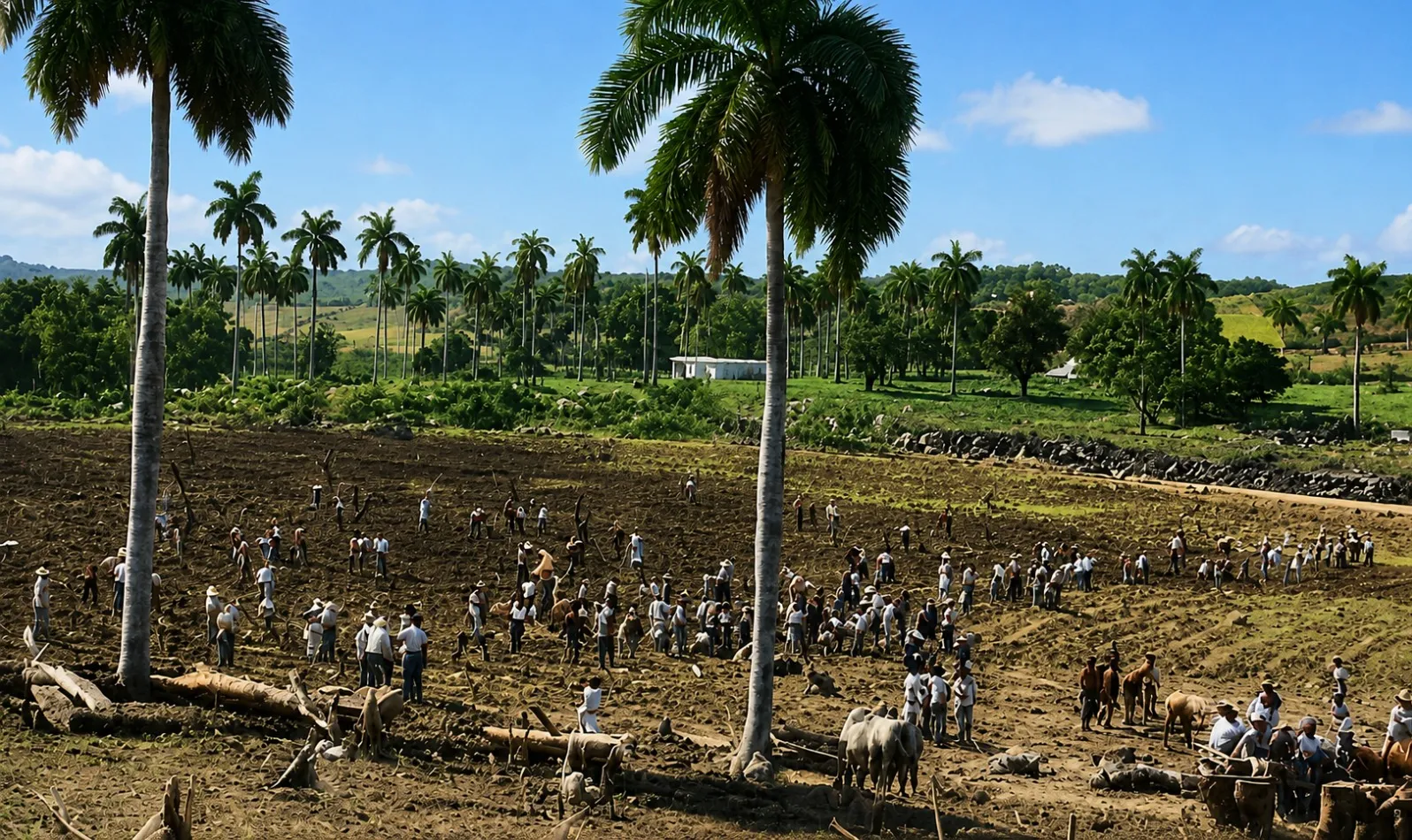
Although severe inequalities existed—especially in rural areas— where concentration of property and seasonal unemployment ruled, Sixto argues that addressing those social problems did not require dismantling the capitalist system in the agricultural sector entirely. Profound structural reforms of the agrarian economy could have been implemented, thereby avoiding the subsequent sharp decline in productivity that continues to contribute to persistent food shortages.
Sixto emphasizes that Cuba had social indicators above those of other countries in the region, an expanding middle class, and a relatively developed service sector. This complexity is essential to understanding why the "leap to socialism" was not an “inevitable” response to a devastated country, but rather a political decision.
First Steps: Nationalizations, Agrarian Reform, and the Break with the United States
Between 1959 and 1961, Cuba underwent the most radical transformation of its economic structure: the massive confiscation and nationalization of enterprises, banks, industries, and land. Sixto argues that this process unfolded more rapidly and with less planning than is often acknowledged.
Cuba also broke from international institutions as early as 1960, leaving the World Bank and thereby redefining its legal and economic framework in pursuit of economic independence and to guarantee a legacy of self-determination - principles that continue to underpin its resistance. That withdrawal was followed by Cuba’s retirement from the International Monetary Fund in 1964, an organization of which it had been a founding member in 1944.
The first agrarian reform (1959) aimed to dismantle large estates and redistribute land. However, the creation of the National Institute of Agrarian Reform (INRA) and subsequent nationalizations replaced private latifundia with state-controlled ones. A second agrarian reform expanded state ownership even further, consolidating large-scale state farming, and exerting control over the remaining farms of more than 167 acres (cinco caballerias).
By 1960, the expropriation of U.S. and Cuban firms marked a point of no return. Sixto interprets these actions as responses to both ideological pressures and escalating confrontation with Washington. The rupture in trade with the United States triggered a crisis in the sugar sector and forced Cuba to seek support from the Soviet Union. In the author’s view, the U.S. embargo followed rather than caused the radicalization of the country. In turn, the Cuban government’s response was to accelerate nationalizations and declare the Revolution to be a socialist, consolidating an economic model that was highly centralized.
Accelerated Construction of Socialism and State Centralization
Between 1961 and 1965, Cuba consolidated a centrally planned economy inspired by the Soviet model but shaped by its own revolutionary volunteerism. Authorities began the failed experiment of central planning, eliminating markets, without any statistical infrastructure and administrative and technical expertise. The elimination of market mechanisms along with centralized price-setting and bureaucratic allocation of resources led to growing inefficiencies and they subsequently triggered the collapse of the budgetary financing model and the administrative accounting system that had been put in place.
Revolutionary leaders, influenced by Guevarist (Che Guevara) thought, underestimated material incentives and overestimated “revolutionary consciousness” as a driver of productivity. This led to failed experiments, as in the case of the budgetary finance system. Mass mobilizations—harvest campaigns, voluntary labor, student brigades—sought to compensate for declining productivity in a model incapable of generating sustained productivity.
A New Dependency: the USSR, CMEA and Subsidies
The alliance with the Soviet Union ensured the survival of the socialist project but created a new form of dependency. The USSR purchased Cuban sugar at preferential prices and supplied oil and industrial goods. While beneficial in the short term, this relationship reinforced the country’s concentration in sugar and discouraged diversification in production, resulting in a new economic dependency, grounded on foreign financing made available for geopolitical motives and not through an arm’s length commercial exchange.
Moreover, in addition to Sixto’s contentions, and based on research by other authors in Soviet archives, in the 1960s and 1970s alone, the Soviet Bloc transferred to Cuba, through cooperative arrangements, the equivalent of an aggregate of $80.3 billion in current dollars. If we were to add the transfers made in the 1980s the aggregate contribution in current dollars would exceed $115 billion.
Cuba’s integration into the Council for Mutual Economic Assistance (CMEA) required it to adopt Soviet standards and administrative structures, further centralizing and rigidifying the economy. These arrangements, as the author points out, merely postponed rather than resolved Cuba’s structural economic problems.
Economic and Social Consequences of the 1959–1965 Period
The so called “leap to socialism,” in terms of productivity, economic structure, social welfare, and political culture, illustrated how massive state ownership reduced incentives, generated bureaucracy, and lowered productivity. The economy became more vulnerable to external shocks and increasingly dependent on Soviet subsidies. Ultimately, even the gains that the country achieved were the result of the use of resources not generated through the country’s economic achievement; but rather, they were obtained from external sources, masking the permanent structural crisis into which the system had sunk.
Although the country advanced in education, healthcare, and social mobility, these gains rested on a fragile and heavily subsidized economic base. Over time, this model proved unsustainable, leading to deterioration in both the quantity and quality of social services.
During this period, the government also consolidated a centralized political system with strict state control over the economy, media, and social life. According to Sixto, this structure curtailed individual freedoms, limited innovation and entrepreneurship, and restricted economic autonomy.
Finally … The Fun Is Over
Omar Sixto’s analysis offers a well-documented critical reinterpretation of the 1959–1965 period, moving away both from the official narrative of the Revolution and from simplistic views that reduce the Revolution to a failed project from its inception. His central thesis—that the “leap to socialism” was an improvised, ideologically driven, and economically costly process—rests on a careful reading of primary sources and a deep understanding of economic dynamics.
This essay has summarized how Sixto reconstructs a period in Cuban history marked by radical political decisions, internal tensions, external dependence, and profound social transformations. His principal contribution lies in demonstrating that the Cuban economy was not destined for a socialist outcome, but was instead steered in that direction by a combination of political, ideological, and geopolitical factors. The book invites readers to reconsider Cuban economic history from a less dogmatic perspective, one more attentive to the complexity of historical processes. Ultimately, this historian’s work not only sheds light on the past but also provides insight into the current challenges facing the Cuban economy, which remains shaped by decisions made during those formative years.
The work reflects the almost boundless scope of Omar Sixto’s research, establishing it as a key contribution to the historiography of the past seventy years of the Cuban nation. It is difficult to find another book that addresses this period and the social and economic processes that unfolded within it in such depth. The book stands out not only for its subject matter but also as a clear example of rigorous historical scholarship. Methodologically robust, extensively documented, and grounded in a remarkably thorough analysis of sources, it allows its author to leave an enduring intellectual legacy on a vital period of contemporary Cuban history. Readers approaching this work would benefit from carefully studying the extensive bibliography that underpins its design and analysis.
Sixto’s work also provides evidence of the consequences of an experiment in which the very distortions that now render the system largely unreformable—and close to an implosion—were incubated. Within this system coexist many of the most damaging conditions for national development: the nationalization and militarization of the economy and society, the erosion of individual incentives, the restriction of individual freedom, unrealistic planning combined with structural corruption, and a disregard for innovation, dissent, and the pursuit of efficiency.
The work offers a detailed account of the trajectory that led to the dismantling of one of the most dynamic societies and economies in the region during the second half of the twentieth century.
References
Sixto, O. (2025). Se acabó la diversión: La economía cubana, 1959-1965 (segunda edición). Vueltabajo Media.
Gilbert, J. P., “Les échanges économiques entre Cuba et l’Union Soviétique”, en Problèmes d’Amérique Latine, no. 64, París, 1982, p. 93-121, tableau VII, p. 110.
Devereux, John., “The Absolution of History: Cuban Living Standards after 60 Years of Revolutionary Rule”, Revista de Historia Economica-Journal of Iberian and Latin American Economic History 39.1 (2021), pp. 5-36.
This article is a summary of a more comprehensive analysis that may be downloaded here:
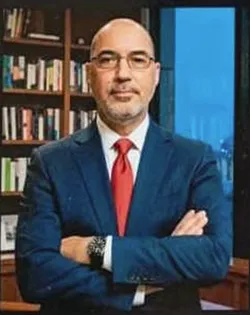
Born in the Luyanó neighborhood of Havana, Omar Sixto is a historian and entrepreneur with thirty years of experience. He graduated in 1991 with a bachelor's degree in history from the University of Havana. Since 1995, he has lived outside the island.
Mr.Sixto manages the blog Cuba Olvidada, where he publishes texts about the country’s history and current reality. He is the author of El tren de los egos historia documentada del primer ferrocarril de Hispanoamérica (1834–1842), a history of the first rail line built in Cuba.
Professor Albizu-Campos received his Bachelor’s Degree in Industrial Economics from the University of Havana (1986). He worked as a specialist in Demography at the Latin American Demographic Center, Costa Rica (1989). Thereafter, he received his Ph.D. in Economic Sciences from the University of Havana (2001), and a Ph.D. in Demography, University of Paris X-Nanterre (2002). He served as professor at the Center for Demographic Studies from 1988 to 2018 (Full Professor from 2001 to 2018) and thereafter as a Full Professor at the Center for the Study of the Cuban Economy from 2018 to 2023, both at the University of Havana.
Since 2023, Professor Albizu-Campos has worked as a scholar and researcher at the Christian Center for Reflection and Dialogue – Cuba.
Among his published works are: "Cuban Demographic Dynamics: Background for an Analysis; Fertility, GDP and Average Real Wage in Cuba"; "International Migration of Cubans: Current Scenarios; Cuba: Demographic Scenarios toward 2030"; "Toward a Population Policy Oriented toward Human Development; Cuba: A Look at the Economically Active Population"; "Cuba: Aging and the Demographic Dividend. Challenges to Development"; "Is the Decline in the Economic Activity of the Population a Temporary Phenomenon in Cuba?"; “Demographic Turmoil?”; “The Ghost that Haunts Cuba”; “Cuba and its Emigration: The Exit as Voice”; “Cuba. Una rápida mirada a la emigración y población; "Cuba: Demographic or Systemic Crisis"; “The Polycrisis and the Power that Reverses the Relationship Between Politics and Economics”; "Life Expectancy in Cuba Today: Differentials and Conjunctures"; and "Maternal Mortality in Cuba: Color Matters".
He has received several National Awards from the Cuban Academy of Sciences and the University of Havana.