
Cuba Is Aging Amid Crisis, Without Protection or Rights
Cuba is undergoing a process of social policy retrenchment in which the state is reducing its responsibility for providing social welfare and shifting its costs onto families—and, within families, disproportionately onto women—and, more recently, onto the market.
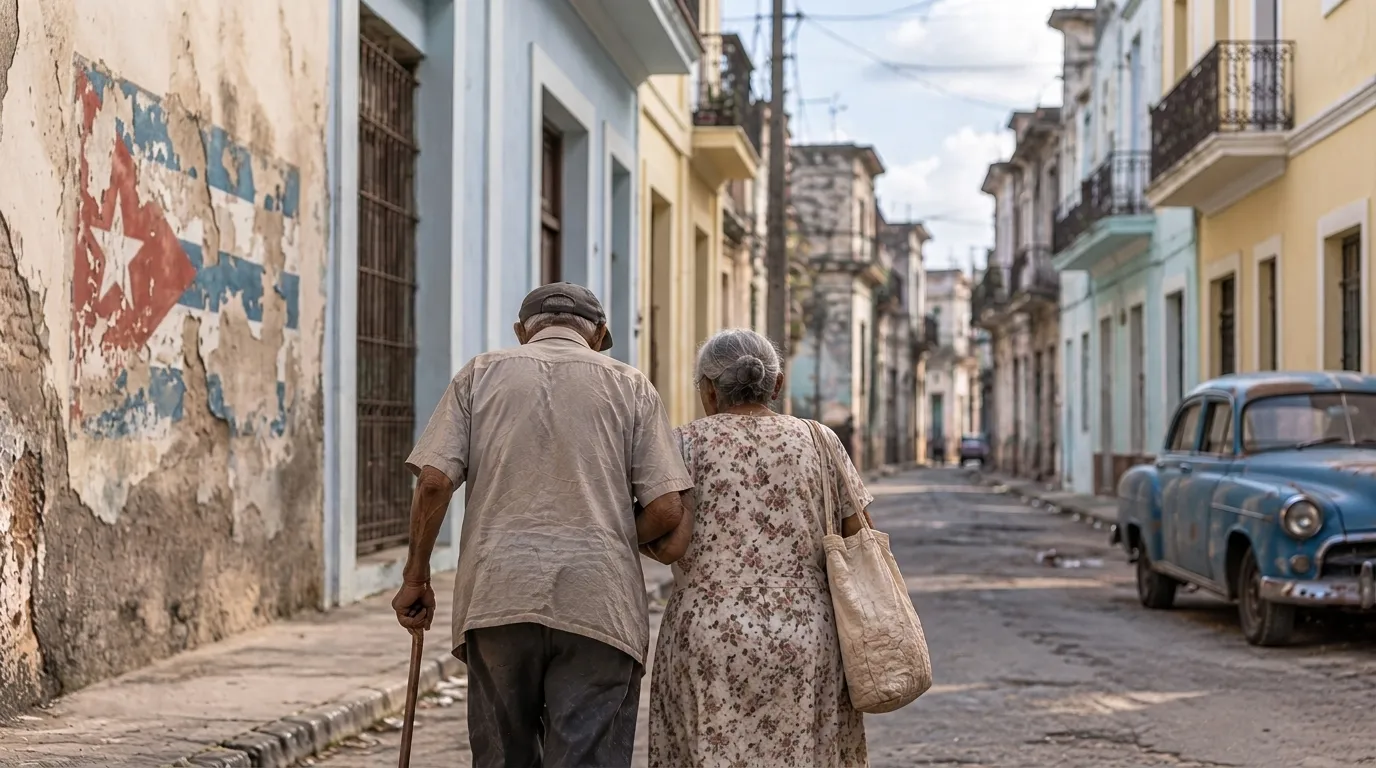
Cuba is now the most aged country in Latin America and the Caribbean. The National Office of Statistics and Information (ONEI) has just released data for 2025 showing an increase of one percentage point over 2024. At the end of 2025, people aged 60 and older accounted for 26.7% of the population (ONEI, 2026), nearly twice the regional average of 14.7% reported by ECLAC (2024).
Official projections indicate that this proportion will reach 36% by 2040 (ONEI, 2026). The updated data on aging published by ONEI are welcome, but they fall short on information about how Cuba's population is aging. In addition to the absence of an up-to-date population census—the last was published in 2012—the National Survey on Population Aging (ENEP), which provides important information about the material circumstances and dependency of older adults, has not been conducted since 2017, nearly a decade ago.
The authorities have portrayed population aging primarily as a challenge characteristic of wealthy countries, one that Cuba must confront with insufficient resources (DCC, 2026). However, an examination of the circumstances reveals that the challenges extend well beyond a mere shortage of resources. The official narrative obscures the state's political responsibility for turning what should have been a positive development for Cuban society into one of the country's most serious contemporary crises. By contrast, Uruguay and Chile, countries in the region with highly aged populations and developing economies, have adopted political, economic, educational, and investment measures to respond to this demographic transformation (Acosta et al., 2018).
As experts have repeatedly argued, population aging is not itself a problem. Rather, the problems lie in the absence, inadequacy, or unsustainability of the economic and social policies and resources needed to address the challenges it creates (Díaz-Briquets and Acosta, 2023). Through independent monitoring by Cuido60, we have been warning about the consolidation of a process of social policy retrenchment in Cuba, in which the state is reducing its responsibility for providing social welfare and shifting its costs onto families—and, within families, disproportionately onto women—and, more recently, onto the market.
Estimates by various sources had warned of the challenges, costs, and transformations that population aging would bring to Cuban society. In practice, however, while government rhetoric suggests that the issue receives priority attention, public resources, programs, and services for older adults have contracted. Amid accelerating impoverishment and a humanitarian crisis on the island, older people are among those most severely affected. We are witnessing a formal withdrawal of state responsibility and a forced, de facto privatization of social welfare.
This distinction is fundamental: demographic challenges do not, in themselves, determine the conditions under which a society ages. Economic, institutional, and political decisions determine how the associated costs and opportunities are distributed.
In this article, we examine three interrelated processes: the dynamics of population aging amid crisis; the reorganization of care through the transfer of responsibilities back to families and the commercialization of care services; and the weakening of social protection.
Accelerated Population Aging Amid Growing Precarity and Declining Social Protection
Three forces are accelerating population aging in Cuba:
- The first is the sustained decline in births. The total fertility rate stands at 1.29 children per woman, its lowest level since 1958, and for every birth recorded in 2025, two people died (ONEI, 2026).
- The second is emigration, which has reached one of the highest levels in Cuban history. More than one million people, predominantly young people and women, left the country in less than five years (Acosta et al., 2025), and the working-age population declined by 1,259,894 people between 2021 and 2025 (ONEI, 2026).
- The third is rising mortality in a deteriorating healthcare system (Albizu-Campos, 2025).
These developments have two sets of consequences. On the one hand, older adults have become more isolated while simultaneously assuming greater caregiving responsibilities for grandchildren, spouses, and even older relatives. It is important to recognize the gender dimension of population aging in Cuba: women account for 54% of the country's older adult population (ONEI, 2026).
On the other hand, the sustainability of the pension system is coming under increasing pressure. Between 2028 and 2032, the so-called silver tsunami would bring the retirement of approximately 180,000 workers, compared with the entry of only 120,000 people into the labor force. The ratio of active workers to retirees, which stood at 3.6 in 1989, is projected to decline to 1.8 in 2030 and 1.3 in 2040 (Mesa-Lago, 2023).
These demographic and pension pressures are compounded by a far-reaching deterioration in income distribution. Although official data on poverty and inequality are unavailable, estimates suggest that the Gini coefficient (the measure of inequality) has increased considerably, from 0.24 during the 1980s to between 0.45 and 0.50 today, according to various independent calculations. Cuba’s aging population is also experiencing growing disparities in income, housing conditions, and participation in social and cultural life, alongside increasing marginalization (Zabala, 2020). These inequalities affect particular demographic groups—including women, nonwhite Cubans, young people, older adults, and people with disabilities—and vary across regions.
The population, as a whole, has become poorer, but older adults experience some of the most acute forms of vulnerability. Various estimates of poverty by independent specialists and monitoring organizations agree on this point. People over 60 emerge as the most vulnerable group: 83.6% depend on a pension, and more than 54% had not received one during the preceding six months (Food Monitor Program and Cuido60, 2026).
The pension system, the principal source of economic security for older adults, faces structural deterioration. Nearly 40% of retirees receive minimum pensions, while those who emigrate lose their entitlement to collect them (Cuido60 et al., 2026). Social assistance, meanwhile, has progressively declined since 2006, both as a share of GDP (gross domestic product) and in the number of beneficiaries receiving it (Mesa-Lago, 2023).
Economic vulnerability also translates into concrete deprivations that undermine nutrition, health, and basic living conditions. According to the Food Monitor Program's 2025 National Food Security Survey, 56% of older adults had experienced a considerable or complete loss of purchasing power for food during the preceding six months, 37% reported that someone in their household had gone hungry, and 89.8% faced persistent difficulties obtaining medicines. Women were particularly affected (Cuido60 et al., 2026; González and Acosta, 2025).
These hardships are compounded by blackouts, shortages of water and cooking fuel, the collapse of transportation, and the late-2025 outbreak of arboviral diseases, which officially caused 65 deaths, one-third of them among older adults (Cuido60 et al., 2026). These are simultaneous and persistent deprivations, not isolated episodes.
Growing precarity also entails the erosion or loss of social rights enshrined in the Constitution and defined as responsibilities of the state. These problems are compounded by a chronic housing crisis; the collapse of public transportation and reduced physical accessibility; the deterioration of the healthcare system and the public health crisis; and the widespread decline of public services such as street lighting, funeral services, sanitation, and garbage collection, as well as sports facilities, recreational spaces, and cultural centers. The digital divide is also widening, while mistreatment and structural violence are increasing. As a result, processes of acute insecurity have emerged, bringing greater vulnerability, loss of rights, erosion of social ties, and weakening of the conditions necessary to sustain a dignified life.
Responsibilities Shifted Back to Families and Commercialized Care
State-provided services for older adults are organized through the Comprehensive Care Program for Older Adults, administered by the Ministry of Public Health, which limits its institutional scope (Acosta González et al., 2018). In 2021, the country had 156 nursing homes (11,947 beds) and 375 day-care centers for older adults (13,375 places). The latest official figure from the Ministry of Public Health indicates that the number of nursing homes remained unchanged in 2026, while the number of day-care centers declined to 307 (Juventud Rebelde, 2026). State support, already inadequate, has not kept pace with the growth of the older population and has actually contracted.
Costs have also increased. Following the so-called Tarea Ordenamiento[1] monetary reform of 2021, residential services raised their monthly fees to between 1,260 and 792 pesos. Compared with a minimum pension of 1,528 pesos in 2021—approximately six dollars at the official floating exchange rate— the costs were high and occupancy in day-care centers fell to about half their capacity (Acosta González et al., 2023). In the latter case, this was not because demand had declined, but because the costs of care and transportation increased while the purchasing power of pensions deteriorated.
In 2024, the government established the National System for Comprehensive Life Care (Decree 109/2024), which recognizes care as a social function and establishes principles of shared social and gender responsibility. Its implementation, however, is constrained by fiscal limitations, shortages of qualified personnel, institutional fragmentation, and weak monitoring mechanisms (Cuido60 and Cubalex, 2025). Meanwhile, services provided by religious organizations, community groups, and civil society have become the second most important source of care after the state. Yet these organizations operate without an adequate legal framework and under an associations law that does not permit independent organizations to function freely (Acosta González et al., 2023; Cuido60 et al., 2026). In fact, social policy has shifted caregiving responsibilities back to families, as reflected in legal norms and practice, transferring a responsibility shared under the Constitution by the state, society, and families to households and, disproportionately, to women.
This transfer of responsibilities to families has not, however, been accompanied with the resources needed to assume those obligations. At the same time, care has become increasingly commercialized: what was once a social responsibility has become a service available only to those who can afford it (Acosta et al., 2023; González and Acosta, 2025). Neither process is new. Both date back to the shift in social policy that began with the 2007 “updating of the economic and social model,” which introduced selective eligibility criteria, a more restrictive interpretation of social justice, and a greater role for the market in meeting basic needs (Acosta, 2021; Bobes, 2016; Espina, 2020).
Cuban scholarship on caregiving has documented these processes and their underlying causes: the predominance of economic rationality in social policy and the reduction of social spending. In 2021, the Tarea Ordenamiento intensified these trends through rising prices and cuts in social assistance (Mesa-Lago, 2023). The burden of care is not distributed equally: it falls disproportionately on women and is compounded by inequalities in income and place of residence (Torres, 2020; Zabala, 2020). Moreover, Cuba's population-aging policy has maintained a narrow focus, placing greater emphasis on encouraging fertility than on guaranteeing rights and care for the mothers and children.
More recently, Agreement 10249 of 2025 and Decree 160/2026 opened the door to private-sector participation in providing daytime and long-term care services for older adults and people with disabilities, subject to prior government authorization. These measures expand the categories of services previously authorized only for home-based care.
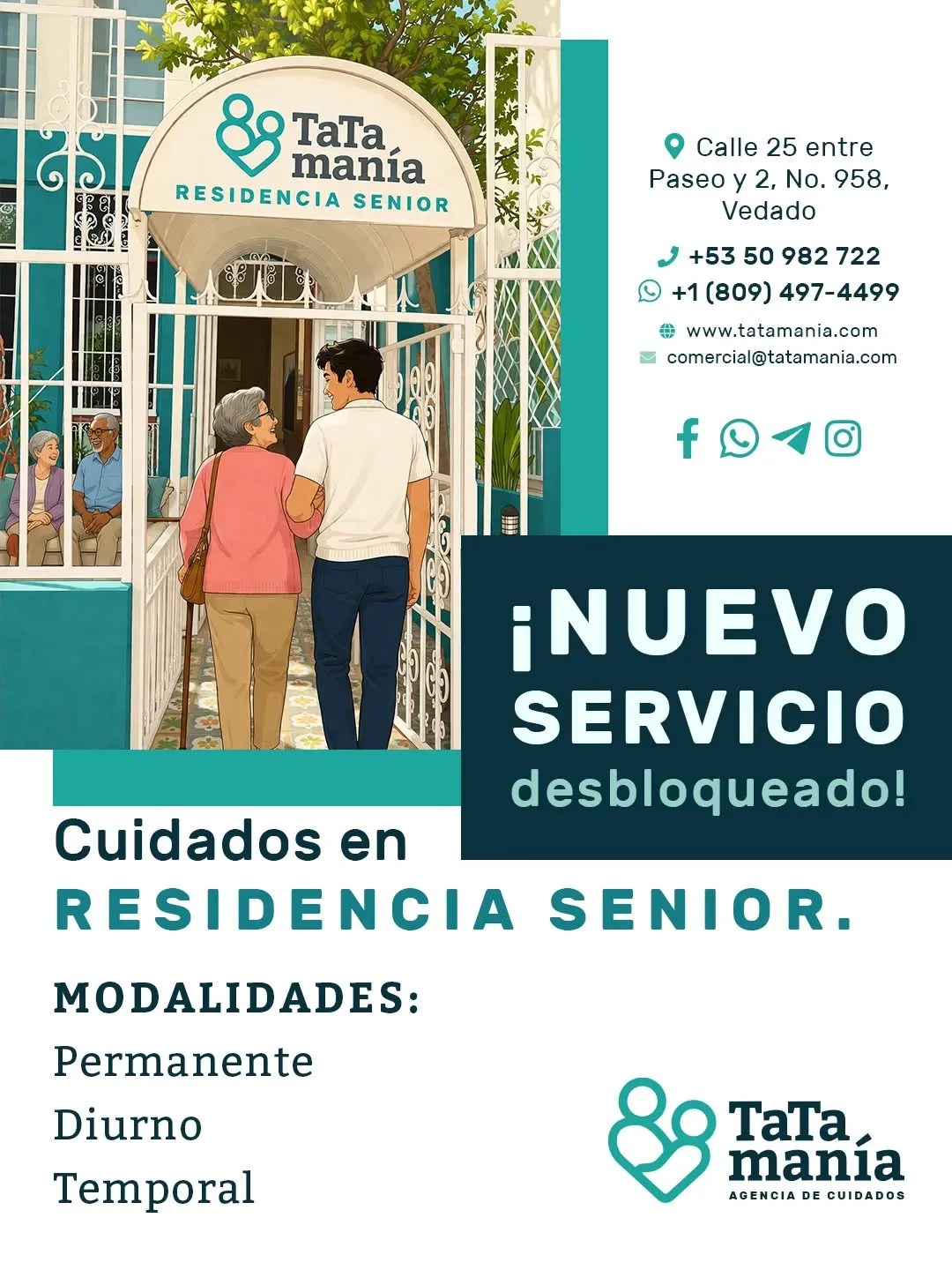
Although belated, the inclusion of the private sector is important for expanding the availability of services to meet existing needs. However, with pensions equivalent to approximately three dollars, this market primarily serves households with relatives abroad who finance care through remittances. The result is a transnational, feminized system of care segmented by income (Acosta and Gómez, 2026). The costs illustrate the measure's limited reach. The first private residential care facility, located in El Vedado, charges as much as $1,080 per month, with hourly rates ranging from $1.35 to $1.75. According to the official exchange rate, a place reserved by law for a vulnerable person would cost 1,260 pesos, compared with 535,680 pesos for the usual place in the private facility (Acosta and Gómez, 2026).
This opening to the private sector contrasts with the restrictions that other potentially decisive actors continue to face in the social organization of care. The Cuban state has not similarly facilitated the participation of independent civil society, the Church, or other organizations that play an important role in providing care on the island. As the crisis has deepened, a wide variety of independent organizations have emerged, providing care while also undertaking advocacy and training activities related to the needs of older adults.
The obstacles to expanding these services, however, are structural and political. Many organizations lack legal recognition, further limiting their access to resources, undermining the stability of their workforce, and exposing their activities, including volunteer work, to potential criminal prosecution. This asymmetry limits the scale, stability, and legitimacy of initiatives operating under precarious conditions without institutional recognition.
Opportunities for the Silver Economy in a Democratic Context
A democratic environment would transform some of today's demographic pressures into opportunities. The silver economy—the range of goods, services, and jobs directed toward the needs of older adults and their well-being—lacks the conditions necessary for its development in Cuba. Enterprises operating in this sector face legal and political obstacles. Community and civil society initiatives, which have demonstrated initiative and the capacity to expand their operations—from care agencies and the manufacture of assistive devices to technological training programs for older adults—operate without legal protection (Acosta et al., 2023).
The challenge, therefore, is not simply to expand the supply of services for a growing population, but to create institutional and economic conditions under which this demand can also become an opportunity for inclusive development. Freedom of association, legal certainty, and access to financing could transform currently unmet needs—including home-based and residential care, rehabilitation, specialized food products, accessible housing and transportation, assistive technologies, digital literacy, recreation, and companionship—into opportunities for formal employment and the development of new local value chains. These opportunities could also benefit older adults who wish to remain economically active with employment opportunities. The diaspora, which already supports the care of many older adults through remittances and other forms of assistance (Acosta and Gómez, 2026), could also contribute investment, knowledge transfer, and structured transnational cooperation. This opportunity, however, will not materialize automatically, nor can it be realized through market mechanisms alone.
Without a foundational legal framework, the silver economy would reproduce the segmentation already evident today, providing high-quality services to households receiving remittances while leaving the rest in precarious conditions. The silver economy could constitute a development strategy, rather than another form of exclusion, only if it rests on a principle of universal care and social protection, generates decent employment for caregivers, and recognizes older adults not merely as recipients of services but also as consumers, workers, and participants in society.
Final Considerations: Toward a Rights-Based Reorganization of Care
Addressing the challenges of population aging in Cuba requires a democratic reorganization of care that moves beyond the false dichotomy between an absent state and an unregulated market. Here are four general recommendations:
Public Responsibility and System Sustainability
The state must recognize care as a public function that cannot be delegated away, and revive the now moribund National System for Comprehensive Life Care with sustainable budgetary support, establishing minimum levels of protection, establishing affordability ceilings, and targeting subsidies wherever care responsibilities have already shifted to the market.
Regulation and Labor Rights
Private providers must comply with verifiable standards of quality and affordability and recognize the labor and social security rights of caregivers, many of whom currently work in the informal sector.
Public Information and Civil Society Participation
Providing regular, publicly available, disaggregated information is essential, as is the creation of a legal framework—including a new law on associations—that allows independent civil society, including the transnational Cuban community, to operate, monitor, and participate in policymaking.
Guarantees of Protection and International Standards
Any future process of economic liberalization and political transformation must establish minimum guarantees of social protection for older adults, consistent with the Inter-American Convention on Protecting the Human Rights of Older Persons (2015), a regional benchmark that the Cuban state has not signed. These guarantees should complement the instruments Cuba has already ratified, including the Convention on the Elimination of All Forms of Discrimination Against Women and the Convention on the Rights of Persons with Disabilities, as well as the rights recognized in the 2019 Constitution.
Cuba faces not only a demographic transition but also the possibility of a political transition, with the two converging critically around caregiving and the sustainability of life. In my view, the evidence indicates that the Cuban state's response has centered on combining the withdrawal of social responsibilities with the preservation of political control: privatizing social welfare without democratizing power.
Without safeguards to ensure equitable access or meaningful civil society participation, the commercialization of care—even when subject to regulation but lacking effective oversight—risks exacerbating inequalities in access to adequate and dignified care for the most rapidly aging population in the region. The silver economy, in turn, can offer meaningful opportunities only if its development is grounded in the protection of rights rather than serving as a substitute for them. How this tension is resolved will determine whether aging with dignity in Cuba becomes an enforceable right or remains an unfulfilled promise.
Referencias
Acosta, E., Duany, J., Grenier, G., Morales, L., Aguilar, G., Rojas, N., Eissmann, I., González, J. P. y Lache, M. A. (2025). Nuevos flujos migratorios en las Américas. Migrantes cubanos, venezolanos y salvadoreños en Estados Unidos, México, Colombia y Chile (2019-2024).
Acosta González, E. (2021). Estructura social en Cuba: resurgimiento de desigualdades, restratificación y nueva configuración social. En L. Obregón (coord.), Cuba postrevolucionaria. Una mirada panorámica (pp. 127-150). GAPAC / Editorial Dunken.
Acosta González, E. y Angel, S. (2020). Radiografía del envejecimiento poblacional en Cuba: desigualdades acumuladas y nuevas vulnerabilidades. En E. Acosta (Ed.), Crisis de cuidados, envejecimiento y políticas de bienestar en Cuba (pp. 101-138). Editorial Universidad Sergio Arboleda.
Acosta González, E. y Gómez Güell, F. (2026). La reorganización de los cuidados en la crisis estructural en Cuba: mercantilización y refamiliarización de la atención a la vejez (Documento de Trabajo N.º 8). Observatorio sobre la Economía Cubana.
Acosta González, E., Lache Muchicon, A. y Burgos Martínez, L. (2023). Los cuidados a personas mayores en Cuba en un contexto de crisis estructural y de refamiliarización de la política social. Ciudadanías. Revista de Políticas Sociales Urbanas, (13), 1-33.
Acosta González, E., Picasso, F. y Perrotta, V. (2018). Cuidados en la vejez en América Latina. Los casos de Chile, Cuba y Uruguay. SOPLA-Fundación Konrad Adenauer.
Albizu-Campos, J. C. (2025). Cuba: ¿Crisis demográfica o sistémica?, Horizonte Cubano, Columbia Law School.
Bobes, C. (2016). Reformas en Cuba: ¿actualización del socialismo o reconfiguración social? Cuban Studies, 44, 165-188.
Bobes, C. (2025). Impactos Sociales de la Crisis Económica. Notas sobre Precarización, Serie de Documentos de Trabajo, Documento de Trabajo No. 5, Observatorio sobre la Economía Cubana.
CEPAL (2024). Cuba – Informe nacional 2024. Comisión Económica para América Latina y el Caribe.
Cuido60 et al. (2026). Crisis humanitaria, cierre del espacio cívico y vulneración incrementada de los derechos de las personas mayores en Cuba [Intervenciones ante la CIDH, 196.º período de sesiones, Washington D. C., 4 de agosto de 2026.
Cuido60 y Cubalex (2025). Creación del Sistema Nacional para el Cuidado Integral de la Vida en Cuba: desafíos legales y de implementación.
Espina, M. (2020). Reforma y emergencia de capas medias en Cuba. Nueva Sociedad, (285), 108-121.
Food Monitor Program y Cuido60 (2026). En Cuba hay hambre 2025. Encuesta de Seguridad Alimentaria
González Marrero, C. y Acosta González, E. (2025). Impact of the multifactorial crisis on food security, care, and quality of life of older people in Cuba. Social Politics, 32(2), 407-429.
Mesa-Lago, C. (2023). El impacto social de la crisis económica en Cuba. elTOQUE, 11 de enero.
El envejecimiento de la población. Cuba y sus territorios – 2025. Oficina Nacional de Estadística e Información (ONEI).
Torres, A. (2020). Regímenes de bienestar en Cuba: mujeres y desigualdades. Cuban Studies, 49, 6-31.
Zabala, M. del C. (2020). Análisis interseccional de las desigualdades en Cuba 2008-2018. Publicaciones Acuario FLACSO-Cuba, Centro Félix Varela.
[1] The so-called Tarea Ordenamiento was an economic and monetary reform implemented in Cuba in 2021. It sought to unify the currency and eliminate state subsidies but ultimately became a complete disaster that deepened the country's crisis. By drastically devaluing the Cuban peso and exponentially increasing wages without a corresponding increase in real production, it triggered uncontrolled inflation, devastated families' purchasing power, exacerbated food and medicine shortages, and caused a complete loss of confidence in the national currency.

Elaine Acosta González is a sociologist who holds a Ph.D. in International and Intercultural Studies from the University of Deusto in Bilbao and a master's degree in Latin American Social and Political Studies, ILADES, Chile. She currently directs the Observatory Cuido60 on Aging, Care, and Rights (www.cuido60.com) and is an adjunct researcher at Florida International University (FIU). She previously served as Director of the Master's Program in Sociology at Alberto Hurtado University in Chile and Director of the Diploma Program in Humanism and Society at the Fray Bartolomé de las Casas Center in Havana, Cuba. Professor Acosta's research focuses on caregiving work, international migration, population aging, and social welfare policies.