
The Questionable Transfer of State-Owned Assets to Private Control in Cuba
The government is using the transfer of state-owned assets announced under the 176 measures to consolidate the economic power of government officials and “trusted” entrepreneurs.

I do not believe it is a coincidence that CIMEX, Cuba’s largest state-owned conglomerate, has taken the initiative to transfer publicly owned business assets to private actors. The corporation is part of GAESA, the mega-conglomerate owned and operated by the Cuban military and exempt from the auditing authority of the Office of the Comptroller General of the Republic.[1]
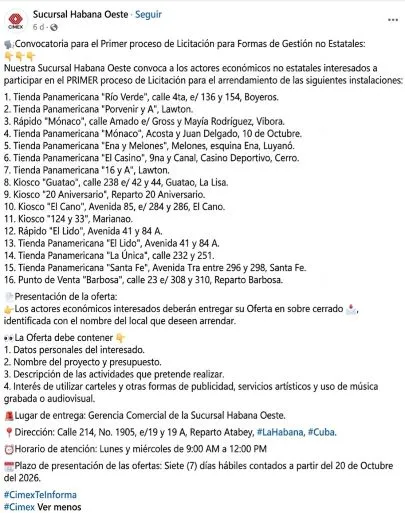
CIMEX recently announced competitive tenders for commercial premises and cooperative production contracts with food-processing enterprises, allowing only truly short time periods for submitting proposals.
I am not worried about the expansion of private property or markets. I support a social market economy for Cuba that combines private ownership, competition, and individual initiative, along with a clear regulatory framework and social protections, in which the state addresses market failures while preserving the market's primary role in allocating resources.
My concern is that those who profess to defend a socialist economy—a vaguely defined concept that, in practice, is increasingly giving way to private ownership and market mechanisms—may be using the transfer of state-owned assets to consolidate economic power in the hands of government officials and politically favored entrepreneurs, often through the use of front persons.
Such transfers may involve an outright transfer of ownership or de facto control through long-term leases, surface rights, concessions, or other management arrangements. What form of socialism is being defended, and what kind of capitalism is emerging in its place?
The Omissions of Law 120/2026
This form of transferring assets out of state control is authorized under Article 28.1 of Law 120/2026, which expressly permits the sale and other forms of disposition of state-owned assets:
“In exercising its authority to dispose of assets, an enterprise may purchase and sell assets, contribute them as investments toward the establishment of new enterprises, and monetize underutilized assets through short- or long-term leases or other arrangements with domestic economic actors or foreign investors, in accordance with the decisions of the owner's representative and applicable law.”
Thus far, CIMEX has used two mechanisms to transfer operational control to non-state actors without transferring ownership, which remains with CIMEX/GAESA: leasing commercial premises and entering cooperative production contracts involving state-owned assets. These initial arrangements could eventually lead to outright asset sales.
It is worth recalling that, under the Constitution, the assets of Cuban state-owned enterprises belong to the people “as a whole”. The state entities responsible for administering and managing those assets serve as their custodians.
Numerous opportunities for the capture of state-owned assets exist for which Law 120/2026 provides no solid preventive safeguards.
In the Leasing of Commercial Premises:
- Prolonged operational control of leased state-owned premises. Exclusive use of an asset, combined with automatic or preferential renewals, could become permanent de facto control, even though the state retains formal ownership.
- Accumulation and concentration. Awarding several premises to the same ultimate beneficial owner—whether through an individual, a micro, small or medium enterprise, or a family group—facilitates their concentration in the hands of a few actors, unless clear limits are applied, such as by municipality or by beneficiary.
- Incentives for speculative asset capture. Temporary rent exemptions and minimal public-service obligations can facilitate rent extraction through high prices denominated in foreign currency and resale transactions.
- Connections to existing networks. Favoring those already operating within supply chains linked to CIMEX/GAESA, allows the private actor to obtain control over state-owned assets without purchasing the property.
In cooperative production contracts, asset capture may occur primarily through undervaluation:
- Inadequate valuation of state contributions. The state entity may contribute actual production capacity, technology, technical expertise, qualified personnel, market access, and infrastructure. Undervaluing these contributions artificially diminishes the state’s share of the returns generated by the enterprise.
- Deficient rules for allocating production or profits. Allocating production, revenues, or profits in a manner that favors the private actor without reflecting the actual value of each party's contributions constitutes another form of shortchanging the state.
Corruption Risks
Regulatory weaknesses aggravate the risks associated with opacity, discretionary decision-making, and inadequate oversight, favoring those with privileged information or established connections through the following mechanisms:
- Extremely short bidding periods. The announced deadlines of only seven business days restrict competition, drastically reduce the number of genuine bidders, and favor those with privileged information or contacts.
- Lack of transparency in leasing and allocating returns. Tender announcements omit the minimum rental price or price range, the maximum contract duration, the payment currency, the technical condition of the premises, and responsibility for repairs and investment. Nor do they specify weighted award criteria or require strict rules for valuing each party's contributions to cooperative production. These decisions are left entirely to an internal committee of the state-owned enterprise.
- Discretionary authority and inadequate management of conflicts of interest. Managers or committees affiliated with CIMEX make decisions without clearly defined control and oversight mechanisms. There appears to be no conflict of interest restriction preventing officials, their relatives, or companies they control from benefiting from the tenders, creating opportunities for favoritism.
- Potential undervaluation of rents and state contributions to cooperative production. Without publicly available benchmark values or disclosed independent appraisals, both may be set below market value. Opaque negotiations and the retention of revenues by the state-owned enterprise create incentives for side agreements.
How Can These Problems Be Corrected?
If policymakers genuinely intend to correct the regulatory weaknesses that facilitate the capture of state-owned assets and corruption, numerous corrective measures are available.
I have addressed this issue in previous writings. Here, I revisit several of my earlier proposals and introduce additional measures specifically designed for transfers of publicly owned business assets and cooperative production contracts.
1. Define “Restricted Persons” in Political, State, and Government Positions
The restrictions would apply throughout an individual's tenure in office and for ten years after leaving office. The following persons would be prohibited from receiving, through any mechanism, shares, assets, usufruct rights, surface rights, concessions, leases of state-owned property, or benefits under cooperative production contracts:
• Members of the Central Committee of the Communist Party of Cuba and its provincial and municipal committees, as well as Party officials responsible for economic activities;
• Members of the Council of State and the Council of Ministers; ministers, deputy ministers, and heads of government agencies, whether or not they belong to the Council of Ministers;
• Members of provincial and municipal governments;
• Deputies to the National Assembly and delegates to provincial and municipal assemblies;
• Officials of the Office of the Comptroller General of the Republic, including provincial and municipal comptrollers;
• Officials of the Prosecutor General's Office;
• Executives of the Central Bank and state-owned banks responsible for allocating foreign currency or credit;
• Officials who direct the National Institute of State-Owned Business Assets (INAEE);
• Presidents of Higher Organizations of Business Management (OSDEs) and executives of enterprises responsible for selling, appraising, or transferring assets and approving cooperative production contracts;
• Senior officials of the Armed Forces and Ministry of the Interior associated with business groups; and
• Spouses, children, and companies controlled by any of the persons listed above, regardless of nationality or place of residence.
2. Prevent Asset Capture Through De Facto Operational Control Without Transferring Ownership
Limit the duration of asset transfers involving contributions to new enterprises, leases intended to monetize underutilized assets, or cooperative production arrangements.
• Establish a maximum initial term of five years for leases and cooperative production contracts, with renewal contingent on a mandatory public assessment of production, employment, prices, and maintenance.
• Prohibit automatic extensions and include termination provisions for concealed subleasing, unauthorized changes of control, or failure to comply with public-service obligations.
Limit the accumulation of commercial premises. Permit no more than two establishments per ultimate beneficial owner in each municipality, establish a public registry of awards, and require disclosure of other premises already leased or managed.
Reduce incentives for rent extraction.
• Make rent exemptions and other incentives conditional on verifiable investments and measurable results, such as documented property rehabilitation.
• Require that a portion of the state enterprise's rental income be allocated to the state budget or a public infrastructure maintenance fund.
Prevent commercial premises from becoming the foundation of privileged networks.
• Prohibit terms in lease and cooperative production contracts that rely on receiving advantageous terms from the state entity that owns the assets, including the use of preferential exchange rates to calculate costs.
• Verify compliance with this requirement and conduct periodic audits of commercial transactions associated with the premises.
3. Prevent Asset Capture Through Lax Award Procedures
Prohibit bidding periods that in effect restrict competition. Establish a minimum of 30 business days for submitting bids and require publication of tender announcements in the Official Gazette (Gaceta Oficial de la República de Cuba), on the entity's website, and in local media, as appropriate to the nature of the tender.
Require transparency in tenders for commercial premises.
- Publish the minimum rental price or price range, determined through an independent appraisal; the contract's duration and payment currency; the condition of the property; and responsibility for repairs.
- Specify the evaluation criteria—for example, price, investment, employment, and business plan—and the weight assigned to each. Require bids to be opened only in the presence of a notary or an independent committee.
Prevent the undervaluation of rental payments.
- Require an appraisal of the asset by an entity independent of the enterprise holding title and publish a minimum reserve price.
- Any proposed reduction must be supported by detailed justification and evidence.
Require independent valuation of all material state contributions to cooperative production. This includes real estate, intangible assets, production capacity, technology, and market access whenever these contributions determine the allocation of returns.
Require objective criteria for allocating production, revenues, or profits according to the actual value of contributions. Cooperative production contracts must include a formula or allocation matrix explicitly reflecting each party's relative contribution.
Limit the discretion of evaluation committees.
- Establish a joint committee comprising representatives of the enterprise, local government, trade union, and Comptroller General's Office, together with an external observer.
- All decisions must be justified and made public.
- Prohibit, without exception, participation by individuals who have family or business relationships with bidders.
Publish the complete award file, including:
- The identity of the successful bidder;
- The final rental price and asset valuations;
- The duration of the lease and cooperative production contract;
- The incentives; and
- The investment plan.
Establish an accessible public registry of all leases of state-owned assets and cooperative production contracts involving such assets.
Require identification of ultimate beneficial owners in contracts, tracing ownership and control to the natural person with ultimate beneficial control of each non-state party to the lease or contract.
- Regulations should require disclosure in both the contract and a public registry whenever a person holds an ownership interest of at least 5% or exercises effective control.
- This threshold, more stringent than the 15% established by Ministry of Justice Resolution 99/2026 for commercial entities, would permit broader identification of beneficial owners and help prevent asset capture.
- Regulations should also require updated disclosures whenever control changes and cross-checking against commercial registries, sworn declarations, and, where possible, information concerning the source of funds.
- Contracts must provide for automatic termination if the identity of an ultimate beneficial owner is concealed or falsified, or if an unauthorized change of control transfers control to a disqualified person. The identity of ultimate beneficial owners must be publicly accessible.
Final Considerations
The lax provisions of Law 120/2026, which governs the “transformations” included in the package of 176 measures, tend to facilitate de facto privatization of leased commercial premises and an unfavorable allocation of the proceeds of cooperative production.
These assets belong to “the people as a whole” and are formally held in custody by CIMEX, one of the country's largest corporations and part of GAESA, Cuba's largest economic holding company, which is exempt from oversight by the Office of the Comptroller General. Through these arrangements, private actors could capture the economic value of state-owned assets by managing them without acquiring formal ownership.
The problem is not the transition toward an economy with greater private participation, but rather the possibility that this transition may rest, at least in part, on the misappropriation of public assets. Such an outcome is not inevitable: the government can correct the regulations and revamp the process if the necessary “political will” exists.
If the regulatory weaknesses result from poor bureaucratic drafting, the government can and should remedy them. If, however, they reflect a deliberate design, “the die is cast.”
The process could give rise to crony capitalism, in which privileged access to public assets, information, and discretionary decisions replaces open competition. It could also coexist with a form of state capitalism in which certain centers of political and military power retain strategic control, outsource management, and capture economic rents through a select networks of private actors.
[1]The collection and organization of the information in this text were supported by artificial intelligence tools; the analysis, however, remains the sole responsibility of the author.
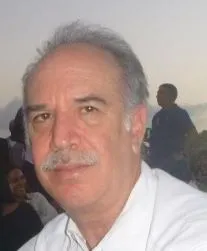
Pedro Monreal González holds both a Ph.D. and a bachelor’s degree in economics from the University of Havana. Thereafter, he served as a researcher at the Center for International Economic Research (CIEI) at the university. From 2008 to 2023, Professor Monreal served as a specialist in UNESCO's Social and Human Sciences Sector, where he coordinated the international Management of Social Transformations (MOST) program. In addition to his research career at several Cuban institutions, he has worked as a professor and visiting researcher at institutions in the United States, Japan, Denmark, and Germany. Professor Monreal is the author of numerous books and essays focusing on international development and public policy. He also coauthored “Alternatives for Policy in the Transformation of the Cuban Economy,” published by the Cuban Economy Observatory (OEC) at the Pontificia Universidad Cali in Colombia.