
Cuba’s Transition Toward an Open Access Fuels Distribution and Marketing System
For Cuba to have an open, independent and efficient petroleum products distribution and marketing business segment, it needs to restructure its current monopolistic oil value chain model.
This updated version of the article, originally published on March 12, 2026, retains its core arguments. These are developed here into a comprehensive technical proposal. It does not consider the impact of two U.S. Supreme Court decisions, Havana Docks Corporation v. Royal Caribbean Cruises Ltd. and Exxon Mobil Corp. v. Corporación Cimex, S.A., issued this Spring. These decisions may well deter future new investment in Cuba that might otherwise have occurred.
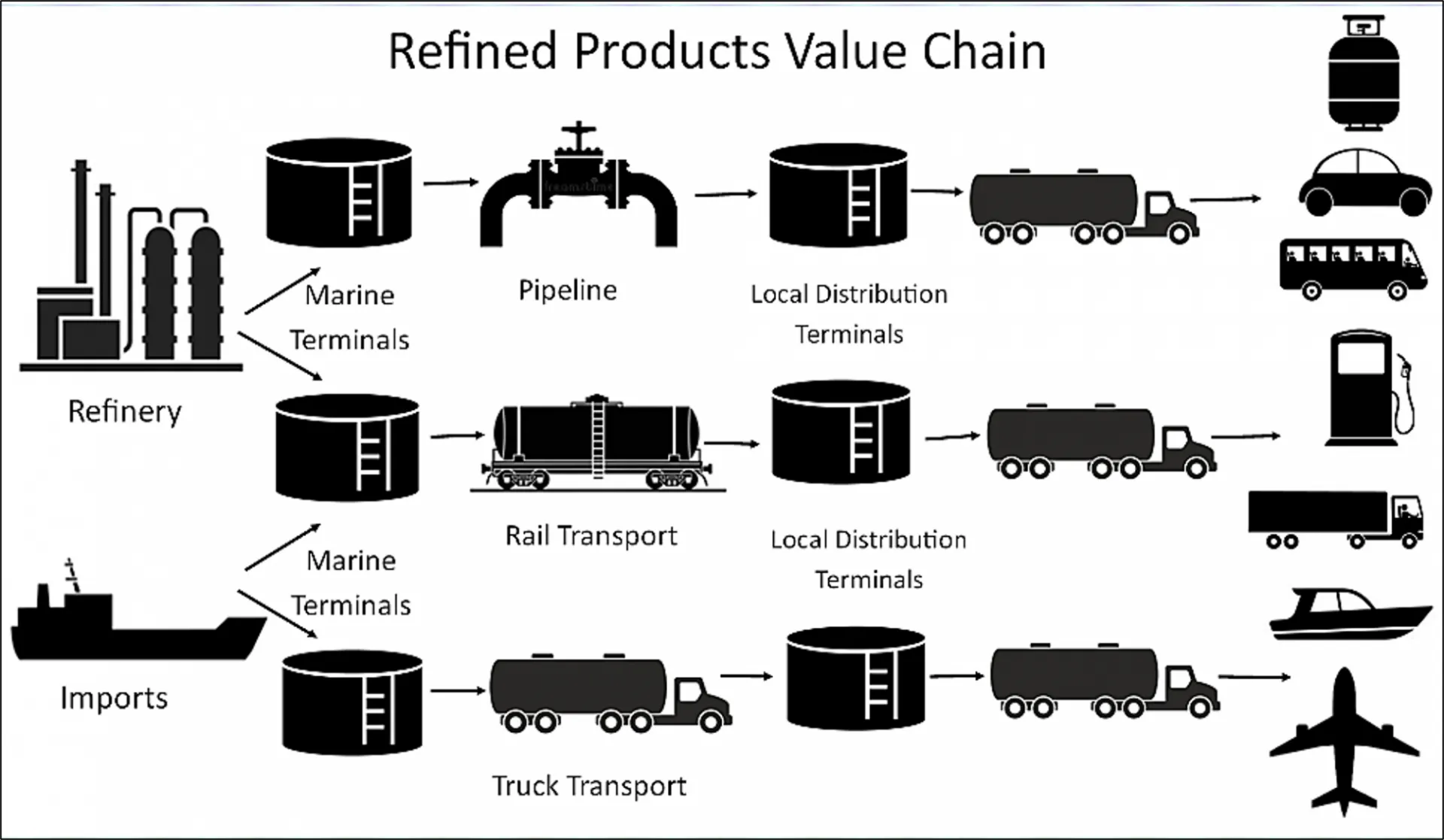
Following the refining of crude oil, the final link in the petroleum products value chain is the distribution and marketing of the oil products. This business segment is responsible for delivering fuels and other oil products to the end customer.
Major oil companies such as ExxonMobil, Chevron, Shell, among others maintain divisions that encompass both the refining and the marketing of petroleum products. Nevertheless, this sector also includes independent fuel distributors and marketers whose primary business is, precisely, the marketing of fuels throughout the oil value chain.
These companies typically acquire fuels from refineries or from wholesale marketers, subsequently transporting, storing, and reselling them through wholesale channels or directly to consumers via branded or unbranded convenience service stations.
Some independent players focus on specific niches, for instance, supplying aviation fuel to airlines, marine fuels to shipping companies, bottled LPG, electric power sector fuels, asphalt, lubricants, or unbranded gasoline to independent service stations.
An open-access logistics system and a common carrier transport framework are indispensable for the supply, distribution and marketing of petroleum products to be successful.
In Cuba, the first step toward achieving this objective of an open-access and common-carrier logistics system is the rationalization of its crude oil refining sector.
Cuba should phase out crude oil refining operations and convert the existing refinery sites into open-access common carrier petroleum products terminals. This transition would modernize the country’s fuel supply system, reduce environmental impacts, and enable a competitive downstream petroleum products supply market within a decentralized economic model.
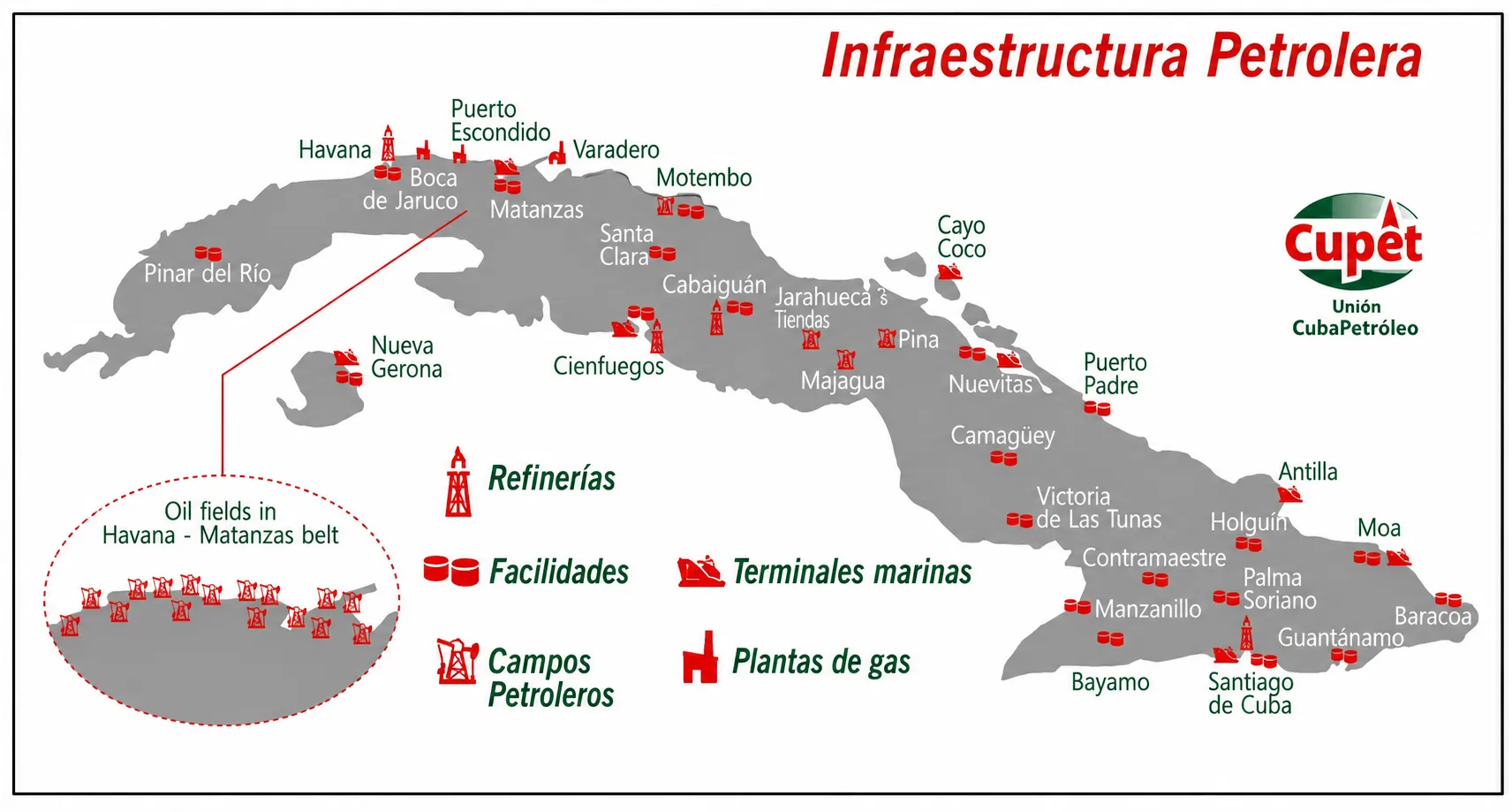
Current Structural Problems with Cuba’s Oil Refineries
Cuba’s refineries suffer from severe technological, financial and operational limitations:
1. Most facilities were built more than six decades ago and have undergone little or no major capital investments.
2. The refineries lack modern conversion upgrading units such as catalytic cracking, coking, and hydrotreating to process heavy high Sulphur crude oils.
3. The refineries have a poor product yield structure; producing 54% high Sulphur fuel oil with only 34% high value products such as diesel, jet-kerosene and gasoline.
4. Cuba’s oil refineries burn various hydrocarbons as fuel to power their own operations; natural gas, internal process gases and heavy fuel oil to fire its furnaces and boilers needed to boil crude oil prior to distillation. Cuba’s refineries are highly inefficient and use an abnormal high volume of crude oil as fuel, as well as electricity in its refinery operations.
5. They have limited crude slate flexibility because they lack complex upgrading units; Cuban refineries cannot efficiently process heavy, high-sulphur crude oils. This forces them to rely on more expensive light or medium crude grades such as: Mesa 30, Isthmus/Olmeca or Urals. This reduces operational flexibility and compresses margins.
6. The refineries significantly and negatively impact on the environment, producing air pollution, ground contamination and water pollution. (Appendix A).
Instead of investing billions in refinery modernization, private investors could repurpose existing Union Cuba-Petróleo CUPET refinery sites into petroleum product import, storage, and distribution terminals. These facilities would operate as an open-access common carrier infrastructure, allowing multiple fuel suppliers to import and distribute products across the country.
A useful precedent is found in Puerto Rico, where all refineries were closed between 1992 and 2009. The former refinery sites were converted into petroleum fuels storage and distribution terminals, allowing the island to rely on imported refined products rather than local refining. This model reduced environmental risk, improved cost structures and simplified fuel logistics.
Over the last thirty plus years over one million barrels per day of unprofitable merchant refinery capacity has been permanently shut down in the greater Caribbean basin -St. Croix, Aruba, Curacao, Bahamas, Trinidad & Tobago- unable to compete with the U.S. Gulf Coast oil refinery industry.
Cuba’s Future Petroleum Products Supply and Logistics Infrastructure
The U.S. Gulf Coast oil refining and logistics system is Cuba’s natural source for the supply of petroleum products. According to the U.S. Energy Information Administration EIA, the U.S. Gulf Coast (PADD3) oil refining system, represents 55% of the total U.S. refining capacity, currently operating at a utilization rate of 90% of capacity. US Gulf Coast represents 80% of US petroleum products exports and only 3-5 days to transit the 800-900 nautical miles distance to Cuba.
Atlantic basin petroleum products arbitrage would also supplement Cuba’s internal demand for fuels. Further, by taking advantage of price and freight costs differences between similar petroleum fuels marketers would be able to purchase fuels in Northwest Europe trading and logistics hub (Netherlands (Rotterdam), Belgium, and Germany) to supply Cuba’s petroleum products demand.
Today, the Cuban state oil monopoly Union Cuba Petróleo (CUPET), Empresa Cubana Exportadora e Importadora de Metales, Combustibles y Lubricantes (CubaMetales) and Corporación CIMEX, S.A. (CIMEX) own and control all petroleum supply and logistics infrastructure, including pipelines, marine terminals, storage facilities, distribution terminals, tank trucks bulk fuel delivery, and gasoline convenience retailing sites.
Were it to adopt in the future a decentralized economic model, Cuba could implement an open-access petroleum logistics system; composed of private carriers, contract carriers and common carriers. Examples of such business models in the U.S. are Buckeye Partners, Oiltanking, Vopak, Groendyke, Altom and Kinder Morgan among others. Colonial Pipeline and Plantation Pipeline are also excellent examples of U.S. common carriers.
Most common carriers operate under regulatory oversight and offer open transportation to the public, not just for their owner's products. They are required to serve all qualified shippers fairly, based on capacity, under contractual terms and conditions. They charge regulated fees (tariffs) for transport, often on a per-unit or per-barrel basis. Shippers can use the service as needed and generally only pay for the capacity used, without entering into long-term commitments.
In a future decentralized economic model, a common carrier fuel transportation system would be needed in Cuba to allow various brands and suppliers to compete under equal footing.
Cuba already possesses a national network of marine petroleum product terminals along with more than a dozen local distribution terminals currently owned and operated by CUPET which could serve as the backbone of a national open-access common carrier petroleum products distribution system.
Petroleum Products Logistics – The EXOLUM Model
Regrettably, as it can be seen in the chart below, Cuba’s current low demand for petroleum products does not justify in the short-term major investments in the single site acquisition and retrofitting of the island’s marine and local petroleum products distribution terminals.
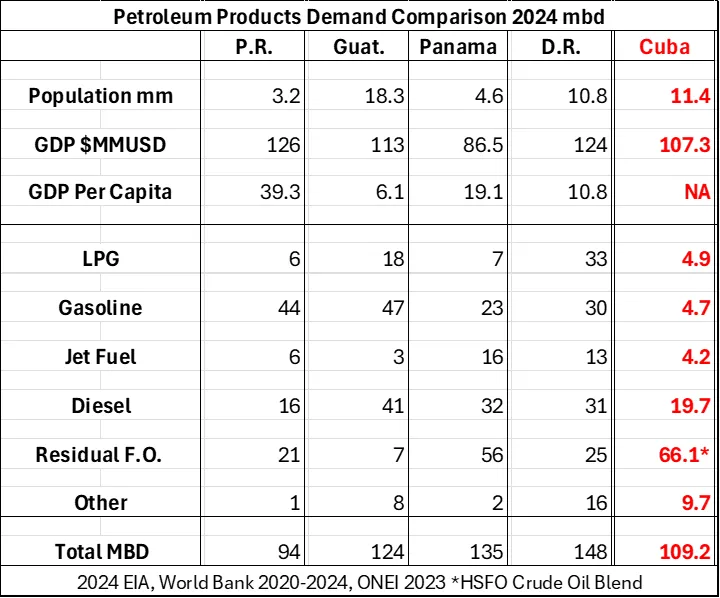
Terminal throughput is a term used to measure the volume of petroleum products moved through a facility over a specific period of time. It is the primary indicator of turnover, asset utilization, and the level of economic activity necessary to support and justify investment in a single site.
Future market growth also faces challenges due to the substantial capital expenditures required for new facility construction, as well as increasingly stringent environmental regulations world-wide governing emissions and safety compliance.
Nonetheless, Spain's 1992 privatization and dissolution of the oil monopoly CAMPSA (Compañía Arrendataria del Monopolio de Petróleos), followed by its restructuring and eventual evolution into EXOLUM*, provides an excellent case study for the potential privatization of CIMEX and CUPET's downstream oil refining, marine terminal, and petroleum logistics operations.
As Cuba's current demand for petroleum products lacks the critical mass necessary to attract major investors; it may want to consider consolidating all government-owned petroleum logistics assets across the value chain into a single business entity, hereafter referred to as the TRUST.
All Cuban government mid-stream and downstream oil and petroleum products business entities, whether domiciled in Cuba or abroad, would transfer legal ownership and operational control of their oil refining, petroleum supply, logistics, and marketing assets to the TRUST.
Excluded from the TRUST are CUPET’s upstream crude oil and natural gas exploration and production assets.
The TRUST would be responsible for temporarily managing day-to-day operations while simultaneously developing and implementing a strategic business plan for future asset rationalization.
This asset rationalization process would involve evaluating, reorganizing, and divesting selected TRUST assets and business units to maximize efficiency, profitability, and alignment with the TRUST's core petroleum-sector competencies.
TRUST’s CUPET-CIMEX asset spin-off, due diligence, and rationalization activities would include, but not be limited to, the following:
- Conduct comprehensive financial reviews, asset inspections, inventory audits, intellectual property evaluations, and assessments of real estate holdings to verify the existence, condition, valuation, and legal ownership of all assets being transferred.
- Identify underperforming, non-core, or redundant assets; reduce associated operating costs; and realign the remaining asset portfolio with the TRUST's core petroleum products, logistics, and marketing competencies.
- Establish clear title to all transferred assets, ensuring that transferors possess the legal authority to convey ownership and that all transfers are valid and enforceable. Identify and resolve issues such as unpaid property taxes, outstanding mortgages, contractor liens, legal judgments, easements, boundary disputes, and other encumbrances that could affect ownership rights.
- Identify environmental liabilities and risks associated with surface, subsurface, and groundwater contamination. Develop remediation plans and cost estimates for the investigation, containment, and cleanup of sites affected by hazardous substances or historical petroleum-related activities.
- Liquidate surplus properties and simplify complex corporate structures through the merger or dissolution of unnecessary legal entities to streamline operations.
The TRUST would ultimately transition to a structure like that of Spain's EXOLUM, with ownership distributed among a consortium of institutional investors, infrastructure funds, private equity firms, and individual private investors. Under this model, the TRUST would operate as a quasi-private monopoly: a privately owned enterprise granted certain exclusive rights to provide essential public services such as a U.S. public utility while remaining subject to strict regulatory oversight governing tariffs, operations, safety, and service quality.
To prevent excessive market concentration, anti-monopoly regulations would be adopted. For example, no individual, private, or corporate entity would be permitted to directly or indirectly own more than 25 percent of the TRUST’s equity capital or voting rights. Additionally, the combined fuel market share represented by the TRUST's shareholders would be capped at 45 percent of total domestic fuel sales, consistent with principles employed in the EXOLUM ownership model.

Today, EXOLUM is Spain's leading provider of petroleum products storage and transportation logistics services. Its infrastructure includes approximately 2,500 miles of pipeline and 39 storage terminals with a combined capacity exceeding 50 million barrels. The company also provides aviation fuel storage, distribution, and into-plane refueling services at Spain's principal airports.
While Spain remains EXOLUM's primary market, the company maintains an international presence in 11 countries, including the United Kingdom, the Netherlands, Germany, France, Ireland, Portugal, the United States, Panama, Ecuador, and Peru.
Retail Fuel Convenience Business Model
The privatization of convenience gasoline stations however offers an important advantage of such investments today which would be to position stakeholders for Cuba’s future growth in fuel consumption, which could eventually justify the required upfront capital expenditures.
Many, if not most, of Cuba’s gasoline service stations are currently located on sites whose size and street access may not reflect future traffic patterns and expected growth. Existing service station locations may not meet the future site criteria required for a profitable and successful business.
Strong competition for prime sites is expected to emerge among retail businesses such as gasoline convenience stores and fast-food restaurants, all seeking to capture future demographic growth and evolving traffic patterns that will accompany economic development.
Neighborhood population density, income levels, age demographics, and growth trends will affect future site selection . Other criteria that will determine the location of future “convenience businesses” includes traffic patterns, parking availability, public transit access, and road visibility; as well as proximity to competitors and complementary businesses.
Retail Fuel Business Model Management
Major integrated oil companies would most probably manage their Cuba future petroleum products supply, wholesale and retail businesses as an extension of their South Florida brand business. Certainly, in the early stages and until Cuba’s retail business reaches critical mass, the joint management model would reduce operational costs.
Branded and unbranded independent dealers and distributors must manage a wide range of overhead costs, including; credit card fees, labor and staffing costs, mortgage or lease payments for prime, high-traffic commercial real estate, and utilities and maintenance expenses. Finally, transportation and freight costs — specifically the expense of transporting fuel from local storage terminals to retail locations — represent another significant operational cost.
Florida receives most of its gasoline and diesel via oil tankers through its oil terminals in Tampa and Port Everglades from US Gulf Coast refineries; a third port discharge would improve marine freight costs to a Cuban port.
According to EIA Florida consumes approximately 490,000 barrels of gasoline per day; compared to Cuba’s approximately 5,000 barrels per day. This places Florida as one of the highest fuel-consuming states in the nation, trailing only Texas and California.
Florida has over 10,550 retail gasoline service stations, with the highest concentrations in Miami-Dade County (1,026) and Broward County (715), according to National Association of Convenience Stores NACS allowing the sharing of business lessons learned.
Conclusion
It is highly unlikely that Cuba’s oil refineries would remain viable in a post–open market system or be able to compete with refineries in the U.S. Gulf Coast.
Converting Cuban refinery assets and marine oil and distribution terminals into common carrier petroleum products terminals would offer a more efficient and competitive pathway for the Island’s energy future in the near term by creating a marketplace in which large international branded oil and refining companies can operate with the support of an independent class of branded or unbranded fuel wholesalers, distributors and convenience fuel retailers.
Transitioning to an open access common carrier terminal-based import system would reduce the need for expensive refinery modernization, lower environmental risks, increase supply reliability and enable multiple competing fuel brands in an open market model.
In comparison, Cuba’s petroleum products wholesale and convenience retail business would not require the same level of investment capital and assumption of risk by investors in order to modernize such facilities as part of the business model.
*EXOLUM information was sourced from open access corporate media reports and web-page Exolum.com.
Appendix A - Scientific Commentary
“…the cities with the worst air quality levels are Mariel, Nuevitas, Moa, Havana, Santiago de Cuba, Cienfuegos, and Matanzas... sulfur dioxide (SO2) is the pollutant most heavily emitted into the atmosphere in Cuba, followed by nitrogen dioxide (NO2) and carbon monoxide (CO), all associated with the burning of fossil fuels.”
Dr. Rosemary López Lee, Director, Center for Atmospheric and Chemical Pollution (CECONT), Cuba, July, 2022.
“Fossil fuel electricity generation has been demonstrated to be a main source of atmospheric pollution. The most part of these fossil fuels are fuel oil with high sulfur content—around 3.5%—and domestic crude oil, with higher sulfur content that fuel oil—among 5% and 7%.”
L. Turtós Carbonell (Centro de Gestión de la Información y Desarrollo de la Energía), E. Meneses Ruiz (Cuba Energía), M. Sánchez Gácita (Cuba Energía), J. Rivero Oliva, N. Díaz Rivero. "Assessment of the Impacts on Health Due to the Emissions of Cuban Power Plants that Use Fossil Fuel Oils with High Content of Sulfur. Atmospheric Environment", Volume 41, Issue 10, 2007.
“The high levels of acid deposit, mainly of sulfates in different locations similar to those that have appeared in adverse environmental impacts in areas of North America, suggest that anthropogenic emissions of SO2, through the use of fossil fuel with 4–7% sulfur content, constitute the main problem for Cuba air quality. At the national level, the most probable anthropogenic sources are the burning of fossil fuels in power plants, the nickel industry, the cement factories, and the burning of biomass in cane fields”.
Margarita Préndez, Dr. Rosemary López (Jefe del Centro de Contaminación y Química de la Atmósfera, Instituto de Meteorología) and Ernesto Carrillo, "Physical and Chemical Components of Cuba’s Rain: Effects on Air Quality. International Journal of Atmospheric Sciences", Volume 2014, August 2014.
“Cluster analysis helped us associate most of the elements with an anthropogenic origin with three main pollution sources: road traffic, industrial emissions and oil combustion. The spatial variability was particularly useful to identify some of these sources including the emissions from diesel and fuel oil combustion in power stations, biomass burning and metallurgic industries. The results also showed that V and Ni were strongly associated to the oil combustion.”
Dr. Yasser Morera-Gómez (Centro de Estudios Ambientales de Cienfuegos), Dr. Carlos Manuel Alonso-Hernández (Director Científico. Centro de Estudios Ambientales de Cienfuegos), Alejandro Armas-Camejoa (Centro de Estudios Ambientales de Cienfuegos), Orlando Viera-Ribota, Mayra C. Morales (Universidad Central "Marta Abreu"" de las Villas), Daniellys Alejos (Universidad Central "Marta Abreu" de las Villas), David Elustondo (Universidad de Navarra), Dra. Esther Lasheras de Jesús (Universidad de Navarra), Miguel Santamaría. Pollution Monitoring in Two Urban Areas of Cuba by Using Tillandsia Recurvation (L.) L. and Top Soil Samples: Spatial Distribution and Sources. Ecological Indicators, Volume 126, July 2021.

Jorge R. Piñon began his 32-year career in the energy sector by joining the supply and transportation organization of Shell Oil Company. He served as president of Amoco Oil de México and president of Amoco Oil Latin America, headquartered in Mexico City. Following the merger between Amoco and BP, Mr. Piñon was transferred to Madrid, Spain, to manage BP Europe's oil supply and logistics operations in the Western Mediterranean.
Prior to joining the University of Texas at Austin as Director of the Latin America and Caribbean Energy and Environment Program at the Center for International Energy and Environmental Policy, he conducted country-specific energy risk research and assessments as a Visiting Energy Fellow at the University of Miami's Center for Hemispheric Policy, the Brookings Institution, and the Center for Latin America and the Caribbean at Florida International University.
Currently, he is an Energy Research Fellow at the Energy Institute at the University of Texas at Austin, where he focuses on developing and maintaining a network of key regional stakeholders who could influence research programs and initiatives on Latin America and the Caribbean undertaken by UT Austin faculty, researchers, staff, and students.
Mr. Piñon has testified on regional energy issues before committees of the U.S. Senate and House of Representatives. He holds a bachelor's degree in Economics and a certificate in Latin American Studies from the University of Florida, where he received the Lifetime Achievement Alumni Award from the Center for Latin American Studies in 2019.