
What is and What is Not Foreign Direct Investment
Many Cubans say that they have foreign direct investment, but what they refer to are in fact contractual arrangements without significant capital placed at risk by the foreign partner.
Part 1 of 3 Parts
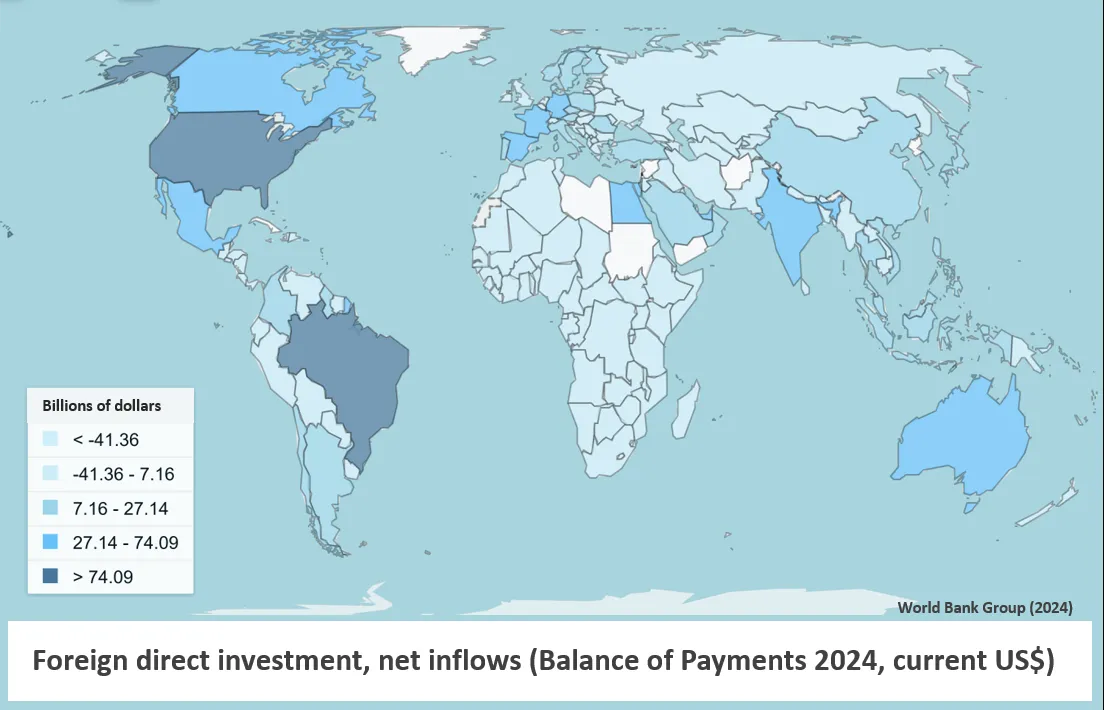
Foreign direct investment benefits both the investor and the host country. It involves substantial capital placed at risk in the host country where the foreign company participates in the local activity, contributing knowledge, skills and technology to the host country economy.[1] The foreign investor provides access to valuable technology and foreign investment capital compensates for the lack of local savings necessary to fund new enterprises. All of these benefits give rise to additional host-state economic activity, which in turn generates tax revenue for the host state and creates new employment.
The methods by which the investment may be structured include:
• Establishment of a business in the host country;
• Purchase of an equity interest in a local enterprise; and
• Entering into joint venture with a local enterprise.
“Substantial capital at risk” means making what is for the investor a substantial capital infusion into the host country. The investor is contributing its own money that is used to obtain the resources necessary to create productive activity in the host country. It does so in the hope of receiving back over time what it invested plus a return. To assure that the terms of the investment are adhered to and protect against takings, the investor would rely on bilateral investment treaties between the investor’s country and the recipient’s country[2], or alternative dispute tribunals in the host country, but more likely those located abroad[3]. The investor would also rely on local legal institutions (local laws and tribunals) to protect the investment and resolve the many issues that result during the operation of a business, such as labor issues or local commercial disputes.
Many Cubans say that they have foreign direct investment, but what they refer to are in fact contractual commercial arrangements of the types described below:
• Management agreements – revenues generated for both the foreign and domestic partners from the foreign partner’s management of a business in the host country, the facilities of which were financed domestically in the host country. The foreign hotel brands that appear in Cuba, particularly in Havana and in the beach resorts, are the product of such commercial agreements, with insignificant capital placed at risk in Cuba by the foreign partner.[4] The cost of the construction of the hotel facilities and the related infrastructure has been borne by the Cuban government. The foreign hotel brand enters into an agreement with a state-owned partner, pursuant to which the foreign partner licenses its brand, manages the hotel in Cuba and sells the hotel rooms abroad. The resulting revenue from the sale of hotel rooms received by the foreign partner are then shared with the local Cuban state-owned partner that built the hotel. This contractual structure concentrates the economic risk on the Cuban side, which assumes the investment in fixed assets and the consequences of a potential loss of profitability or the withdrawal of the foreign operator. Meliá Hotels, the Spanish hotel conglomerate who appears prominently in Cuba, is an example of this arrangement[5].
• Licensing agreements – revenues generated by a foreign partner from licensing abroad a technology developed in the host country. The licensee generates the revenues from this arrangement by using the technology to produce and distribute the product abroad and then shares the resulting revenue with the Cuban government-owned entity that invested in the technology development and is the owner of the technology. Licensing agreements have been commonly used for Cuban biomedical products.[6]
• Marketing distribution agreements – revenues generated by the foreign partner by selling abroad a product generated in the host country. The sales abroad of rum and related products are structured in this manner by the foreign partner who then shares the revenue with the Cuban entity. The agreements with the French company, Pernod Ricard are an example of these types of product marketing arrangements[7].
• Joint production agreements – revenues generated from a capital investment in mining operations where the foreign entity pays part of the upfront costs and participates with the Cuban partner is mining. The minerals are then sold abroad by the foreign partner and, after reimbursement of the foreign partner for its payment of the upfront costs, the remaining revenue is shared with the Cuban entity. The Canadian company, Sherritt, has entered into these joint production agreements to mine Cobalt and Nickel in Cuba.[8]

When reporting on their achievements in attracting “foreign investment”, Cuban authorities tally the commercial arrangements described above and also often include memoranda of understandings and letters of intent where the foreign entity has yet to perform. Those are not enforceable agreements guaranteed to yield future actual capital investment; instead, they are what their titles suggest – expression of an understanding or intent to negotiate an agreement.
What do all these arrangements have in common? Except for the joint production agreements, they do not involve substantial capital investments by the foreign partner, as measured by the investor’s net worth; none of them rely on the local laws or courts to protect the investment. Every single one is structured so as to minimize the risk that Cuba would later renege on the deal and keep all the enterprise revenue to itself. They all function as protective agreements for the foreign entity and are only available with respect to a limited range of types of business activity – those where the foreign partner sells a product abroad and receives directly the revenues from these sales.
Past public filings of Meliá Hotels[9], the Spanish company with a substantial presence in Cuba, demonstrates the general terms of these hotel management arrangements. For instance, Meliá makes an initial relatively small investment of capital in the hotel facility. It enters into a management agreement with the Cuban entity for the hotel. It also obtains for the Cuban partner a revolving credit facility from a European bank that Meliá guarantees. Finally, it sells the hotel rooms abroad and receives the proceeds directly. Pursuant to the management agreement, the revenues it receives are first applied to amortize the initial capital investment, then to pay the lender under the revolving credit agreement, then to pay itself for its management services and finally to deliver a pre-agreed share to the Cuban partner.
Under this type of arrangement there is little need to seek the protection of Cuban law. The structure of the arrangement is the protection that the foreign company needs. However, the arrangement does not involve substantial foreign investment and is limited to business activities where the foreign partner is marketing, selling or producing abroad.
In order to have foreign partners place a substantial capital at risk, Cuba needs to adopt a rule of law legal system. “Part 2. Rule of Law and Economic Development” provides a brief discussion of rule of law and "Part 3. What Cuba Needs to do to Attract the Multinational Investor" describes how Cuba may move forward towards a rule of law system.
[1] Among the benefits that foreign direct investment is considered to “throw off” to the local economy are: skill development through workforce training, specialized expertise development, and empowerment of local workforce to start up new businesses. Another important benefit is that local suppliers and partner firms absorb advanced technological know-how, production standards, and quality-control processes from the foreign investor.
[2] Cuba has bilateral investment treaties with many countries but not with the United States.
[3] See, for example, the International Center for the Settlement of Investment Disputes.
[4] Foreign capital represents only two percent of the investment made in the Cuban tourist industry. Figueras, Miguel Alejandro, “Foreign Participation in the Development of Tourism in Cuba” Horizonte Cubano. February 27, 2020
[5] Sol Meliá Hotels and Resorts 2003 Annual Report.
[6] Everleny, Pérez Villanueva and Albizu-Campos Espiñeira, Juan Carlos, “The Development of Cuba’s Biotechnology: Mechanisms and Challenges”, “Journal of Law, Medicine & Ethics”, Cambridge University Press, Volume 51, Supplement 1, pages 136-147.
[7] Pernod Ricard, Form 20-F filed with the United States Securities and Exchange Commission in 2006.
[8] Sherritt International Corporation, 2020 Annual Information Form.
[9] Sol Meliá Hotels and Resorts 2003 Annual Report.