
Cuba’s Recent Economic Reforms: Legal Opening or Legislative Illusion?
The recent Cuban reforms function less as a uniform liberalization than as an expanded—and still discretionary—list of exceptions to the general rule of state control.
A Reform Moment, but Not yet a Legal Transition
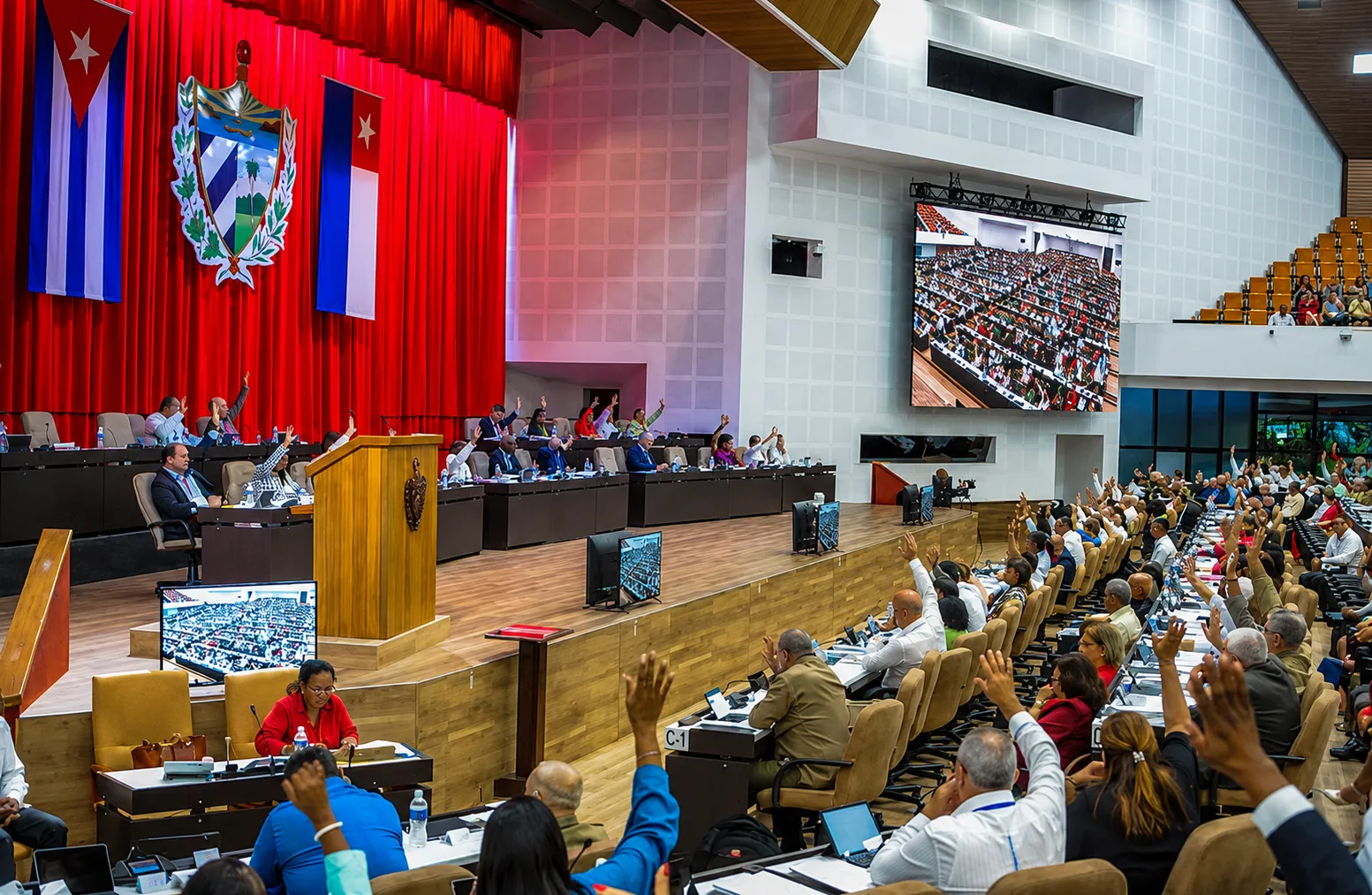
On June 18, 2026, Cuba’s National Assembly of People’s Power unanimously approved 176 economic and social measures organized into 23 strategic areas, in a package Prime Minister Manuel Marrero Cruz presented to the National Assembly as the most consequential economic realignment (the “Recent Reforms”) of his tenure and which London-based Cuban Economist Daniel Torralbas described as the most profound change since 1959 revolution.1 On paper, several elements read as historic: gone is the decades-old requirement that foreign investors form joint ventures with a Cuban state enterprise; private banks are authorized for the first time since before the Revolution; the cap on private sector firm size is lifted; and both Cuban and foreign investors may, in principle, acquire stakes in state-owned enterprises.
A careful reader should resist equating the legislative announcement of the Recent Reforms with legal transformation. Marrero gave lawmakers no implementation timetable, and by the government’s own account, giving legal effect to 176 measures requires amending or repealing roughly 148 existing legal instruments and enacting 32 new ones, including ten laws.2
Six weeks after the vote, only a handful of those legislative instruments had actually reached the Gaceta Oficial. The question this article asks is not whether Cuba has announced an opening – it plainly has – but whether that opening yet amounts to law that an investor, lender, or insurer could actually rely on. Legal significance should not be confused with legal sufficiency.
That distinction matters more, not less, because of the circumstances under which the package was adopted. The vote came as the Economic Commission for Latin America and the Caribbean (ECLAC) projected a 6.5% contraction in Cuban GDP for 2026, as blackouts of 20 hours or more became routine in several provinces, and as a U.S. fuel blockade and expanding secondary-sanctions program tightened in parallel with Havana’s own legislative calendar.
What the Recent Reforms Appear to Change
Four changes stand out as genuine departures from six decades of Cuban investment policy.
1. First, the package removes the historical requirement that a foreign investor partner with a Cuban state enterprise, opening the door to direct investment in genuinely private Cuban firms and cooperatives through international economic association contracts with non-state actors.3 Surface rights for foreign-backed projects were extended to as long as ninety-nine years and usufruct rights to more than fifty, alongside removal of the requirement that foreign-investment firms hire staff exclusively through state labor-intermediation entities.
2. Second, the package authorizes the operation of private banks and private currency-exchange houses under Central Bank oversight, alongside a real-time digital foreign-exchange market. In practice, the Central Bank has operated so far under a narrow March 2026 resolution permitting ten designated companies to use cryptocurrency for external payments. Moreover, the announcement - which is not yet in operation – of Cuba’s first pilot private exchange house, as of this writing is missing rates, eligible currencies, and an opening date.
3. Third, firms may now employ more than one hundred workers, and for the first time an individual may hold an ownership interest in more than one private enterprise.4
4. Fourth, the state’s monopoly over foreign trade is partially dismantled: state, private, and cooperative entities are, in principle, permitted to import and export directly rather than exclusively through a state intermediary, and to acquire equity in state enterprises as those are gradually converted into joint-stock companies.5
Each of these is a genuine legal opening relative to the framework in place before June 18. None of them, however, is self-executing.6 As discussed below, most remain propositions awaiting implementing law.
The Legal Problem: Permission Is Not Protection
Removing a prohibition is not the same as creating an enforceable right, and the distinction matters most in precisely the sectors of energy, infrastructure, large-scale manufacturing, where capital is committed for years before it is repaid. A foreign investor evaluates not only whether an activity is now permitted, but whether the permission, once granted, can be relied upon; whether a contract will be enforced by a tribunal insulated from political direction; whether an approval, once issued, can be revoked at administrative discretion; whether profits can actually be converted and repatriated; and whether the state counterparty’s assets or obligations are shielded form a change in policy.
Cuba’s June 18 package does not address any of these questions directly.
- While it expands the list of permitted activities and eligible investors; it doesn’t create the juridical, regulatory, or contractual infrastructure that gives a permission durable legal content.
- Cuba’s judiciary remains constitutionally subordinate to the Communist Party, without an established tradition of adjudicating high-value commercial disputes independently of state economic policy.7
- Approvals for foreign investment above a given threshold continue to run through the Council of State or Council of Ministers on a discretionary case-by-case basis, a structure that reforms left untouched even as a separate July 2026 decree streamlined certain evaluation procedures under the existing Foreign Investment Law regulations.8
- Cuba’s own recent history counsels caution about equating ‘’authorized’’ with ‘’protected’’: the 2014 Foreign Investment Law’s promise of a more agile approval process coexisted for over a decade with one of Cuba’s largest Western investors accumulating hundreds of millions of dollars in unpaid receivables from its Cuban state partners.
The same logic applies to licensing. A private bank, exchange house, or foreign-invested enterprise operates under a license issued by state authority, and nothing in the June 18 package establishes a transparent standard for when that license can be conditioned, suspended or revoked, or what remedy – judicial or otherwise – is available if it is.
Strategic sectors, moreover, remain expressly reserved to the state or subject to state majority participation regardless of the general opening, so the reforms function less as a uniform liberalization than as an expanded, still discretionary, list of exceptions to default rule of state control.
What the Reforms Do Not Address
Four gaps are worth isolating, because each is dispositive for making an investment in Cuba bankable 9, rather than merely descriptive of Cuba’s broader difficulties.
1. No implementation timetable: The 176 measures depend on a legislative calendar Cuba has not published and has a documented recent record of missing: in 2024, the government enacted only nine of the 17 laws it had scheduled. As of this writing, the Gaceta Oficial shows only a handful of the 32 required instruments in force:
- a minimum-wage decree,
- an April 2026 decree-law establishing “investor” migratory status for Cubans abroad,
- the narrow March 2026 cryptocurrency resolution, and
- a July 2026 decree recalibrating the list of activities off-limits to the private sector.
Private banking and private exchange houses — arguably the package's most consequential axis for outside investors — remain, in the Cuban government's own framing, at the stage of “what” rather than “how.”
2. No independent dispute resolution: Cuba has not ratified the International Centre for the Settlement of Investment Disputes (ICSID) Convention, foreclosing the dispute-settlement forum used by the large majority of the world’s bilateral investment treaties (BITs) and project-finance structures.10 Cuba’s roughly twenty BITs instead rely on the United Nations Commission on International Trade Law (UNCITRAL) or other ad hoc arbitration, and while Cuba acceded to the 1974 New York Convention on the recognition of foreign arbitral awards, an award is only as valuable as the assets available to satisfy it – a limitation discussed further below.
3. No resolution of the GAESA problem: Grupo de Administración Empresarial S.A. (GAESA), the military-run conglomerate that different sources estimate controls somewhere between 40% and 80% of the Cuban economy, depending on methodology, has been listed on the Office of Foreign Assets Control’s (OFAC) Specially Designated Nationals and Blocked Persons List since December 2020 under the pre-existing Cuban embargo. On May 7, 2026, the U.S. State Department separately designated GAESA under Executive Order 14404, specifically for operating in the financial-services sector of the Cuban economy — a distinct legal act that activates Executive Order 14404’s secondary-sanctions authority, extending blocking-sanctions risk to non-U.S. persons, including foreign financial institutions, dealing with GAESA, rather than only to persons already subject to U.S. jurisdiction under the pre-existing embargo. A wind-down period for foreign counterparties to untangle existing dealings with GAESA expired on June 5, 2026.11
OFAC guidance issued June 4 (FAQ 1258) extends secondary-sanctions risk to any entity in which GAESA, the Ministry of the Interior (MININT), or the Ministry of the Revolutionary Armed Forces (MINFAR) hold a 50% or greater interest, whether or not that entity itself appears on the Specially Designated Nationals list – meaning that the Recent Reform’s removal of the mandatory joint-venture with a state enterprise requirement helps an investor only to the extent genuine diligence can establish that a nominally private Cuban counterparty carries no such ownership chain. Designations have continued at pace since: on July 23, 2026, the State Department added nine more entities, including a Guernsey-registered real-estate investor and the firm managing container traffic at the Port of Mariel.
4. No hard-currency convertibility solution: The Recent Reforms authorize a digital foreign-exchange market and private exchange houses, in principle, but they do not resolve the underlying scarcity of hard currency that makes conversion difficult in the first place. Cuba’s informal peso-to-dollar rate has moved from roughly 435 Cuban pesos (CUP) at the end of 2025 to approximately 673-675 CUP in early August 2026– a depreciation of more than fifty percent in seven months – and the Euro now trades even higher than the dollar on the informal market.12 Formal conversion channels have simultaneously narrowed rather than widened: Visa and Mastercard suspended processing on the island on June 6, 2026 after a foreign banking partner severed ties with GAESA’s financial-processing arm, and as of this writing that suspension remains in effect.13 A revenue stream denominated in pesos is, in practical terms, a wasting asset for as long as this gap between announced currency reform and operative conversion infrastructure persists
5. No answer to the Helms–Burton problem– and a materially worse one after June 23: Five days after the reform package passed, the US Supreme Court held, 6-3, in Exxon Mobil Corp. vs Corporación CIMEX, S.A that the Helms-Burton Act itself abrogates the sovereign immunity of Cuban state agencies and instrumentalities, so that a claimant need not separately satisfy a Foreign Sovereign Immunities Act exception to sue a Cuban state-owned enterprise over confiscated property. Combined with the Supreme Court’s earlier decision in Havana Docks Corp vs Royal Caribbean Cruises broadening what counts as ‘’trafficking’’ in confiscated property, any investor entering a joint venture, share purchase, or long-term contract with Cuban state enterprise now faces a meaningfully lower litigation bar for claims tied to pre-1995 confiscations – a risk the Recent Reforms neither created nor mitigate.
Why this Matters for Energy and Infrastructure?
These gaps bite hardest in capital-intensive, long-horizon sectors. An energy or infrastructure project:
- typically requires ten to 20 years to recover its capital;
- depends on a state counterparty for land, grid access, permits, or offtake; and
- needs hard-currency revenue to service any foreign debt.
Each of those features maps directly onto one of the unresolved legal problems described above:
- a tariff or off-take commitment is only as good as the tribunal available to enforce it;
- land and permitting run through the same discretionary approval architecture that the Recent Reforms left in place; and
- a state off-taker or grid operator is exactly the kind of counterparty most likely to sit inside the GAESA-adjacent ownership structures that now carry secondary sanctions and Helms-Burton exposure.
A private-banking law that has not yet been written cannot solve a currency-conversion problem for a solar developer waiting to be paid, and a decree authorizing private participation in fuel commercialization is not, by itself financeable collateral.14 Energy reform cannot be financed on the strength of a policy announcement; it requires contracts that a lender's counsel can actually rely upon — a structuring question, not a policy one, and the subject to which a future article will return.

Comparative Perspective
Cuba is not the first one-party state to try to open an economy through legislation while its underlying political institutions remain unchanged; and a comparison with others is instructive, both on timing, as much as substance. Vietnam’s Communist Party adopted its Đổi Mới reform program in December 1986 and had a foreign investment law on the books within about a year, The law was repeatedly amended through the 1990s, along with a deliberate build-out of bilateral investment treaties that Hanoi treated as a legal priority, not merely a diplomatic gesture.15
Even with that fast legal follow-through, as compared to that of Cuba, meaningful capital did not arrive immediately. Vietnam recorded only a few hundred foreign-investment projects in the law’s first three years, with inflows accelerating sharply only in the early 1990s. Cuba, by contrast, has approved the policies contained in the Recent Reforms without yet legislating the legal framework. Compare that to Vietnam, who substantially built its legal framework within roughly the same span of the time as Cuba has now spent debating an implementation calendar.
Well-designed contractual instruments are only as reliable as the legal architecture underneath them. Sophisticated deal structuring can allocate risk at the margins, but it cannot substitute for the legislative and institutional reform — courts, dispute resolution, ownership transparency, currency convertibility — that the next section sets out.
What would need to be addressed
Turning the Recent Reforms into a genuinely bankable framework for foreign investment would require, at minimum:
- publication of the 32 outstanding legal regulations alongside a public implementation calendar;
- a foreign-investment approval process governed by defined timelines and objective standards rather than case-by-case discretionary sign-off;
- routine recognition of foreign governing law and international arbitration clauses in investment contracts, rather than treatment of them as an exception requiring special approval;
- a private-banking and exchange-house system actually capable of converting and transferring hard currency, not merely the decree authorizing one;
- verifiable separation – through ownership disclosure and independent audit rather than self-certification – between prospective private and mixed-capital counterparties and GAESA, MININT, and MINFAR;
- a due-diligence regime that lets investors and counsel assess title and confiscated-property risk before capital is committed rather than after; and,
- for capital-intensive sectors specifically project-finance or public-private-partnership legislation capable of supporting security packages, step-in rights and lender protections.16
Of course, Multilateral re-engagement – with the International Monetary Fund (IMF), the World Bank and ICSID – sits outside Cuba’s unilateral control.
Short of that, however, Cuba could extend meaningful protection through its existing network of roughly twenty bilateral investment treaties by giving those treaties practical domestic effect, rather than leaving them as instruments Cuba has signed but not operationalized in its own approval and enforcement practice.
This claim requires a constitutional qualification. Article 8 of Cuba's 2019 Constitution17 provides that treaties in force for Cuba form part of, or are integrated into, the national legal order as appropriate, while expressly establishing that the Constitution prevails over those treaties. The issue is therefore not simply whether BIT protections exist, but how consistently Cuban institutions recognize and apply them within that constitutional framework.
Reform without Legal Architecture is Not Bankability
None of this should be read to dismiss what Cuba did on June 18 in adopting the Recent Reforms. Removing the mandatory state joint-venture requirement, authorizing private banks, and opening state-enterprise equity to private and foreign purchasers are real changes to a legal framework that had barely changed in over a decade. But the reforms answer a narrower question that potential investors are actually asking. They establish, in principle, that certain activities are no longer forbidden.
They do not establish that a contract will be enforced, that a currency will convert, that a counterparty is free of sanctions exposure, or that an approval will survive the discretion of the body that granted it.
Those are the questions that determine whether a project is bankable, and six weeks on, they remain open – made harder not easier, by a U.S. sanctions and litigation architecture that hardened in the very weeks Cuba’s own legislature was loosening its own. The 176 measures in the Recent Reforms are, as Prime Minister Marrero himself has framed it, the ‘’what’’. The ‘’how’’ – the laws and regulations, the independent courts, the banks that are able to clear a payment – is the harder project and it is the one on which the value of everything Cuba approved on June 18 will ultimately depend.
[1] CBS News/AFP, “Cuba approves unprecedented free-market reforms in effort to stave off economic collapse,” June 18, 2026 (176 measures; Marrero speech; quoting economist Daniel Torralbas); Sociedad Media.com, “Cuba Approves Sweeping Market Reforms — Calls It Socialism,” June 22, 2026 (23 strategic areas).
[2] Sociedad Media.com, supra note 1 (32 new higher-ranking regulations: 10 laws, 14 decree-laws, 8 decrees; PM Marrero's characterization of the package as the “what” requiring a separate “how”); CubaFull.com, “Guía definitiva de la reforma económica de Cuba 2026,” June 22, 2026 (more than 148 existing legal norms requiring modification, plus 32 new norms including 10 laws).
[3] CubaHeadlines, “Foreign Investors Now Allowed Direct Investment in Cuban Private Enterprises,” June 19, 2026.
[4] CBS News/AFP, supra note 1; CubaHeadlines, “Cuban Official Acknowledges Economic Reforms Will Increase Inequalities,” June 22, 2026.
[5] World-Outlook, “Cuba Adopts Major Economic Reforms,” June 22, 2026; Sociedad Media, supra note 1.
[6] A legal measure is “self-executing” when it creates rights or obligations that take effect automatically upon enactment, without further legislation, regulation, or administrative action. A measure that is not self-executing remains a statement of policy — rather than a rule a court, bank, or counterparty must apply — until the implementing steps described in this article are taken.
[8] OnCubaNews, “Gobierno cubano simplifica trámites con nuevo decreto para atraer inversión extranjera,” 2026 (Decreto 153/2026, modifying evaluation and approval procedures under the 2014 Foreign Investment Law regulations); Pérez Villanueva, Omar Everleny, “La regulación cubana de la inversión extranjera directa” (describing the Council of State/Council of Ministers approval structure under Law No. 118 of 2014, Art. 11 et seq.) in Horizonte Cubano, December, 2018.
[9] “Bankable” refers to a project or investment framework that is sufficiently legally certain, commercially viable and adequately protected against risk to attract financing from lenders and investors. Accordingly, “bankability” describes the degree to which a project or investment meets these conditions and is therefore capable of securing such financing.
[10] ICSID, “Member States” (icsid.worldbank.org) (Cuba not listed among Contracting States as of 2025).
[11] West P&I, “Cuba Sanctions Update — Wind-Down Period Ends As US Designations Accelerate,” July 2026 (wind-down period for dealings with GAESA and majority-owned subsidiaries expired June 5, 2026).
[12] CiberCuba, daily informal exchange-rate reporting (Aug. 1–3, 2026) (USD/CUP informal rate of 673–675 CUP in the days preceding publication, versus a rate of approximately 435 CUP at the end of 2025, per GotoSend, “Tasa de Cambio del Dólar en Cuba Hoy: Mercado Informal 2026”).
[13] Daily Hive, “Visa, Mastercard services suspended in popular tourist destination,” June 2026; Reuters, “UPDATE 1-Cuba to suspend Visa and Mastercard transactions, citing US sanctions,” June 3, 2026 (suspension effective June 6, 2026, following the severance of a foreign processing relationship with FINCIMEX, GAESA's foreign-exchange arm).
[15] Tran Viet Dung, “The Impact of Investment Treaties on the Rule of Law in Viet Nam” (SSRN, 2022); Asian Yearbook of International Law, “Vietnam's Experiences with International Investment Agreements Governance,” Vol. 25 (2019) (Đổi Mới adopted 1986; first Foreign Investment Law enacted December 1987).
[16] A “security package” refers to the collateral, guarantees, and other credit-support arrangements — pledges, assignments of receivables, mortgages over assets — that back a lender's right to repayment. “Step-in rights” allow a lender, on default or a comparable triggering event, to intervene directly or substitute a new operator for the project company, preserving the underlying contracts rather than terminating them. “Lender protections” is a general term for the contractual and legal mechanisms — covenants, cross-default clauses, direct agreements with government counterparties, insurance requirements — that shield lenders against project failure, government interference, and counterparty default.
[17] Constitución de la República de Cuba (2019), Art. 8 (official text, Gaceta Oficial, Apr. 10, 2019: “Lo prescrito en los tratados internacionales en vigor para la República de Cuba forma parte o se integra, según corresponda, al ordenamiento jurídico nacional. La Constitución de la República de Cuba prima sobre estos tratados internacionales.”);

Sofia Lagos is completing a five-year integrated Master’s Degree in Law at the Pontifical Lateran University in Rome, with graduation expected on 28 October 2026. Her dissertation focuses on finance, insurance and banking law, with particular attention to the impact of artificial intelligence on financial markets and regulated institutions.
She has worked for almost a year as an analyst at a London-based firm, where she focuses on market research, corporate analysis and cross-border growth opportunities. Her current research examines how legal and financial structures can support investment in complex jurisdictions, with a particular focus on private equity, infrastructure finance, investment protection and the green energy transition.
Of Cuban origin and raised in Italy, her academic interests lie at the intersection of financial regulation, international investment law, energy transition and emerging markets. Drawing on her Cuban heritage and interest in international economic development, Sofia’s work explores the legal and financial frameworks that could support future foreign investment and reconstruction in Cuba, particularly in the country’s energy and infrastructure sectors.
Sofia is a member of the European Women Lawyers Association.
See also on Horizonte Cubano:
How Cuba Should be Thinking about Capturing Foreign Capital to Boost its Development
What Cuba Needs to do to Attract the Multinational Investor
What is and What is Not Foreign Direct Investment
Foreign Participation in the Development of Tourism in Cuba
GAESA, the Invisible Elephant in Cuba’s Macroeconomic Stabilization