
A Master Plan for 21st Century Havana: A Policy Framework for Architecture, Urbanism and Economic Renewal
By analyzing Havana’s existing conditions, this essay proposes how architectural and urban interventions can promote economic development while safeguarding Havana’s unique cultural identity.
Cities as Cultural and Economic Constructs
Cities are the highest expressions of both material and spiritual culture in any society. They are also complex economic systems whose architecture and urban layout shape productivity, mobility, and social well-being. Thus, their survival is the ultimate and most meaningful goal not only for urban planners and architects, but also for all of humanity.
Havana, the capital of Cuba since 1607, became a distinct Caribbean Metropolis with a European influence by the second decade of the 20th Century. Although it experienced impressive growth during the first half of the last century, it was spared from the damage of global urban renewal and overdevelopment of the second half.
Today, it keeps intact its traditional urban fabric, the only remaining one of its kind in Hispanic America. However, the city’s harmonious juxtaposition of a rich variety of architectural styles, evidenced by an impressive collection of buildings authored by world famous local and international architects, is currently threatened by abandonment and neglect.
Despite the intrinsic beauty of its architecture and urban layout, Havana has experienced extensive deterioration of its infrastructure, including the frequent collapse of dilapidated historic buildings. Moreover, housing, water, garbage collection and public transportation have also disintegrated.
Yet these vulnerabilities also underscore the urgency – and opportunity – for a strategic urban policy that treats architecture not merely as heritage, but as a platform for economic development. In fact, any future economic flourishing of the country as a whole requires a functioning capital city, with safe drinking water, reliable energy and public transportation.
Heritage and Identity
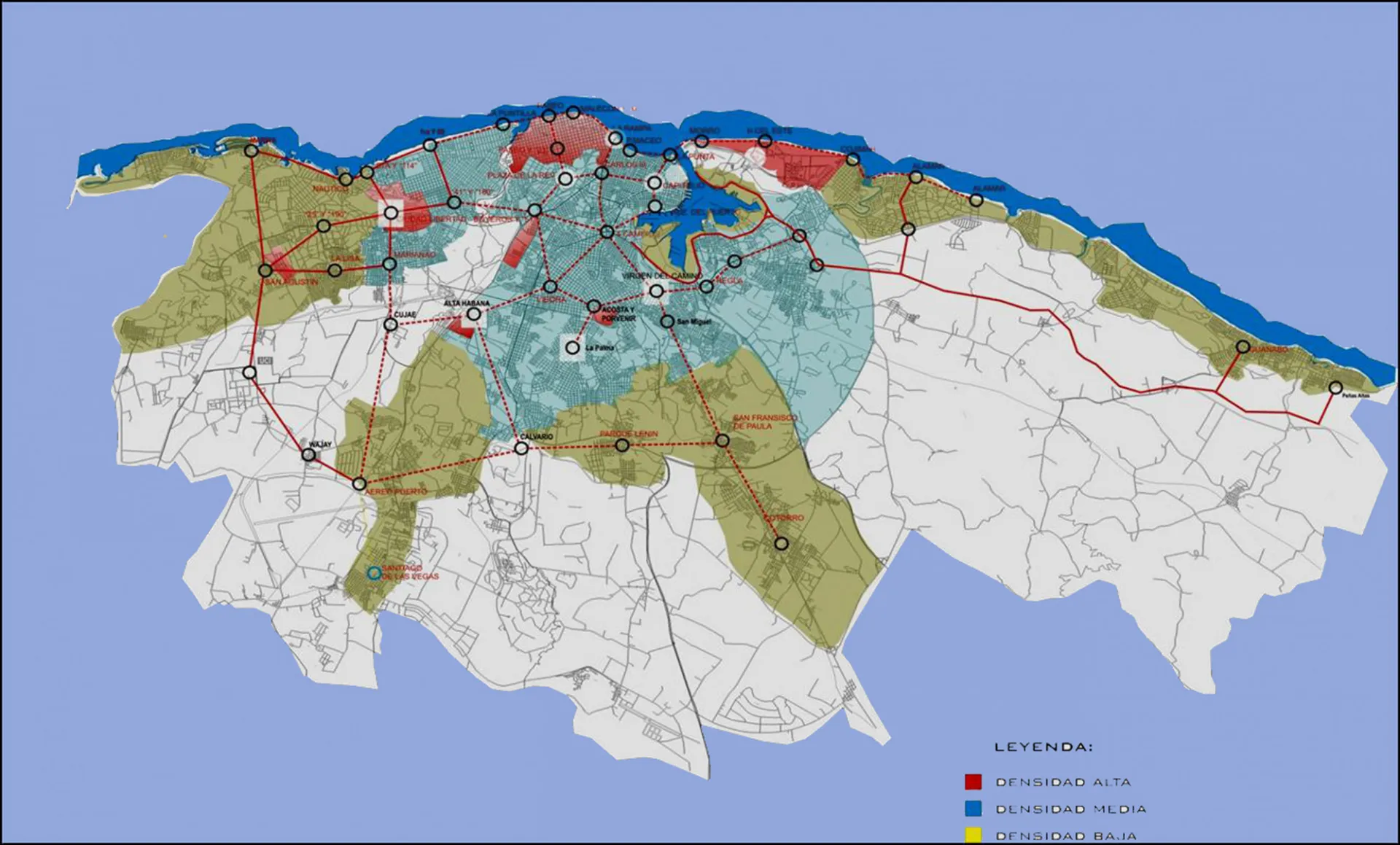
Havana is a city with a spirit, or Genius Loci, that gives life to both people and place, and keeps it a resilient place. It remains today a polycentric city with an extension of 727 Km2 (or 281 square miles), and a current population of about two million inhabitants.
Its intact centuries-old urban fabric is rare in the Americas, offering a foundation for economic development. In urban policy terms, heritage quality correlates strongly with increased tourism and private investment, the emergence of creative and cultural industries and rising property values.
Havana remains one of Cuba’s most valuable assets and the rehabilitation of its derelict infrastructure and its historic preservation is a strategic economic goal that is crucial for the nation’s future.
Overview of the Master Plan
Havana is now ready for a thorough renovation that promotes development while appreciating its five centuries-old history. In 1982, UNESCO[1], recognizing its unique urban and architectural legacy, designated Old Havana and its chain of fortresses as a “World Heritage Site”.
In order to preserve Havana’s legacy and contribute to the survival of the city and the nation, the author, architect and urban planner, Julio César Pérez Hernández, developed A Master Plan for the 21st Century (the “Master Plan”)[2].
The Master Plan aims to preserve the urban and architectural heritage of Havana with its five centuries-old history, creating new economic activities that generate immediate employment in areas encompassing construction, materials production, and conservation crafts. It also aims to contribute to the city’s achieving a level of functioning that attracts investment for the nation and allows for the development of new industries, resulting in a flourishing public life for citizens and visitors alike. It aspires to restore the undeniable beauty, magic, and poetry of Havana.
New legislation covering the reassessment of land values and land uses for all zones within Havana is key to advancing any future redevelopment project in Cuba, in order to grant rights to investors and to recognize the interests of other stakeholders. The aim would be to encourage foreign and local investment, under legal norms that respect both city’s history and current needs.
The Master Plan is based on ten concepts:
- A long-term holistic vision for future development;
- A new civic landscape based on a new legislation for land use;
- Waterfront revitalization, new streetscapes and buildings that relate to the waterfront;
- Natural and cultural heritage preservation;
- Environmental, economic and cultural sustainability;
- Reinforcement of the traditional polycentric urban structure, and completion of the civic center;
- Infrastructure upgrade, including a new public transportation system;
- Increase of public space and green areas and buffer zones to address the sea level rise;
- Mixed-use infill development with emphasis on housing; and
- Revitalization of historic commercial avenues known as Calzadas.
Each principle enhances Havana’s economic competitiveness by strengthening urban functionality and enhancing its global image. The Master Plan is ambitious, extensive, and thorough and can be downloaded here.
Due to space limitations, only some of its concepts are expanded upon below.
Waterfront Revitalization as Economic Strategy
The Master Plan recognizes that the waterfront is Havana’s most strategically significant asset. It extends from Miramar and Jaimanitas in the west to Cojimar and East Havana in the east.
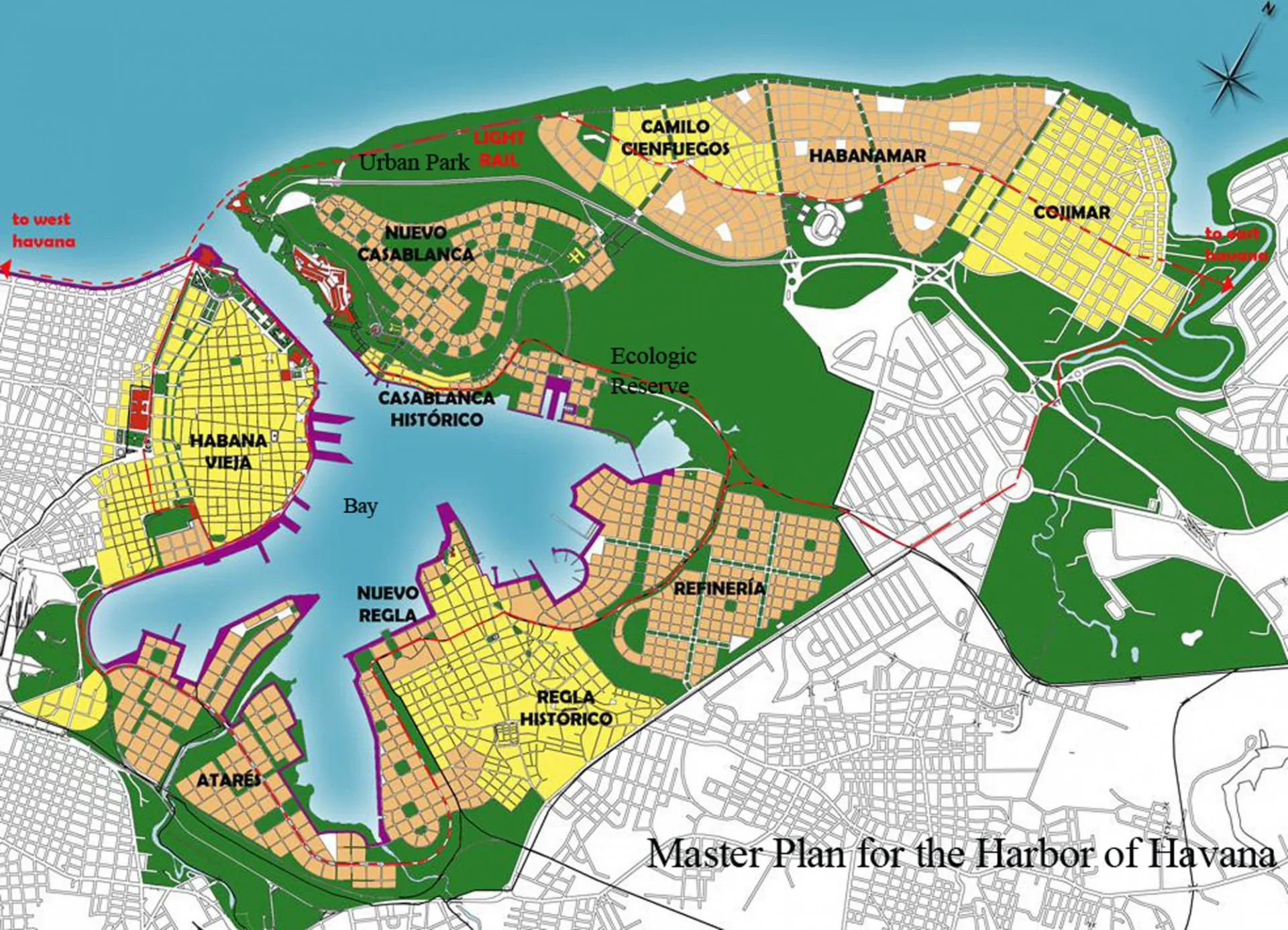
The harbor front section of the waterfront, historically the city’s economic engine, now offers substantial potential for urban redevelopment. By orienting spaces and buildings there towards the sea, it can allow its presence to be felt further inland.
Revitalizing it with a variety of public spaces, including parks, streetscapes and promenades, does more than beautify the harbor area, it strengthens Havana’s international branding, positioning it as one of the few remaining vibrant colonial cities of the world and establishing it as a prominent world tourist attraction.
Maintaining the Polycentric Character of the City
The traditional polycentric character of Havana, a city of multiple colonial plazas of unique architectural character, each a historic district, would be enhanced by increasing the amount of green space within them. By developing green spaces in the various city centers, the city can create a verdant alternative to those available through suburban sprawl.
A counterpart to the enhancements and functionality of the new plazas envisioned by the Master Plan is completing the city thoroughfares to increase connectivity among those historic districts.
Transportation and Infrastructure
Upgrading Havana’s transportation system with the introduction of light rail, electric buses, and multimodal tunnels supports economic development by reducing travel times and logistics costs, facilitating movement of goods and people, enabling higher-density commercial and residential activity – all foundational to increasing the city’s economic productivity and investment appeal.
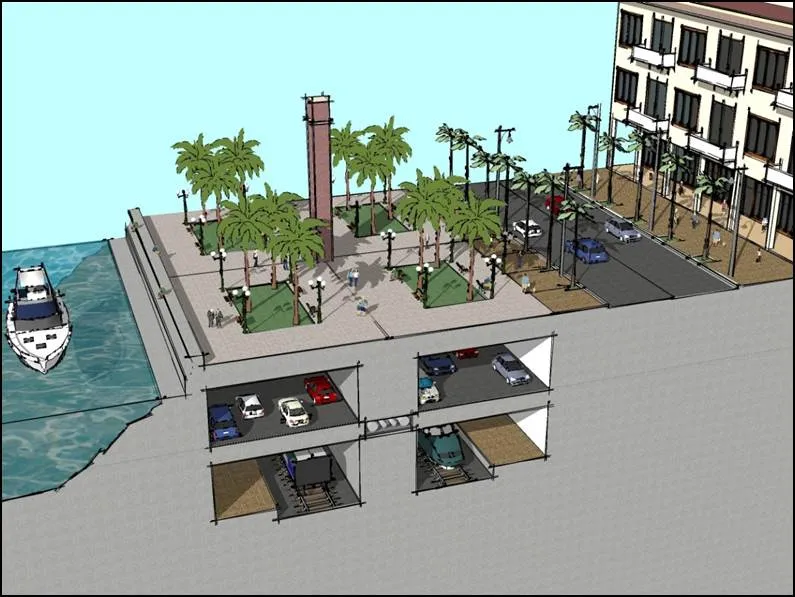
For the Malecón stretch of the waterfront this is achieved by extending the Malecón wall beyond its current location and taking advantage of the existing topography of the reef by building underground tunnels for public and private transportation. Efficient means of transport running along the tunnels such as hybrid and electric buses and light rail, will decongest the current East-West traffic and respond to current massive public transportation needs.
The upper surface of the East-West tunnel anchored on the reef slope creates a buffer zone that protects the buildings along the public promenade by blocking the marine spray, while also resolving the current regular flooding of the area with a new and efficient drainage system.
Revitalizing the Historic “Calzadas”
Another goal of the Master Plan is the revitalization of the historic commercial arteries, called Calzadas, created in an expansion plan between 1817 and 1819[3] and made world famous for the commercial density developed along their spans and their vibrant street life. These Calzadas are avenues, flanked by colonnaded buildings, that in the past contained a multitude of commercial establishments, while their porches offered pedestrians shelter from the sun and rain.
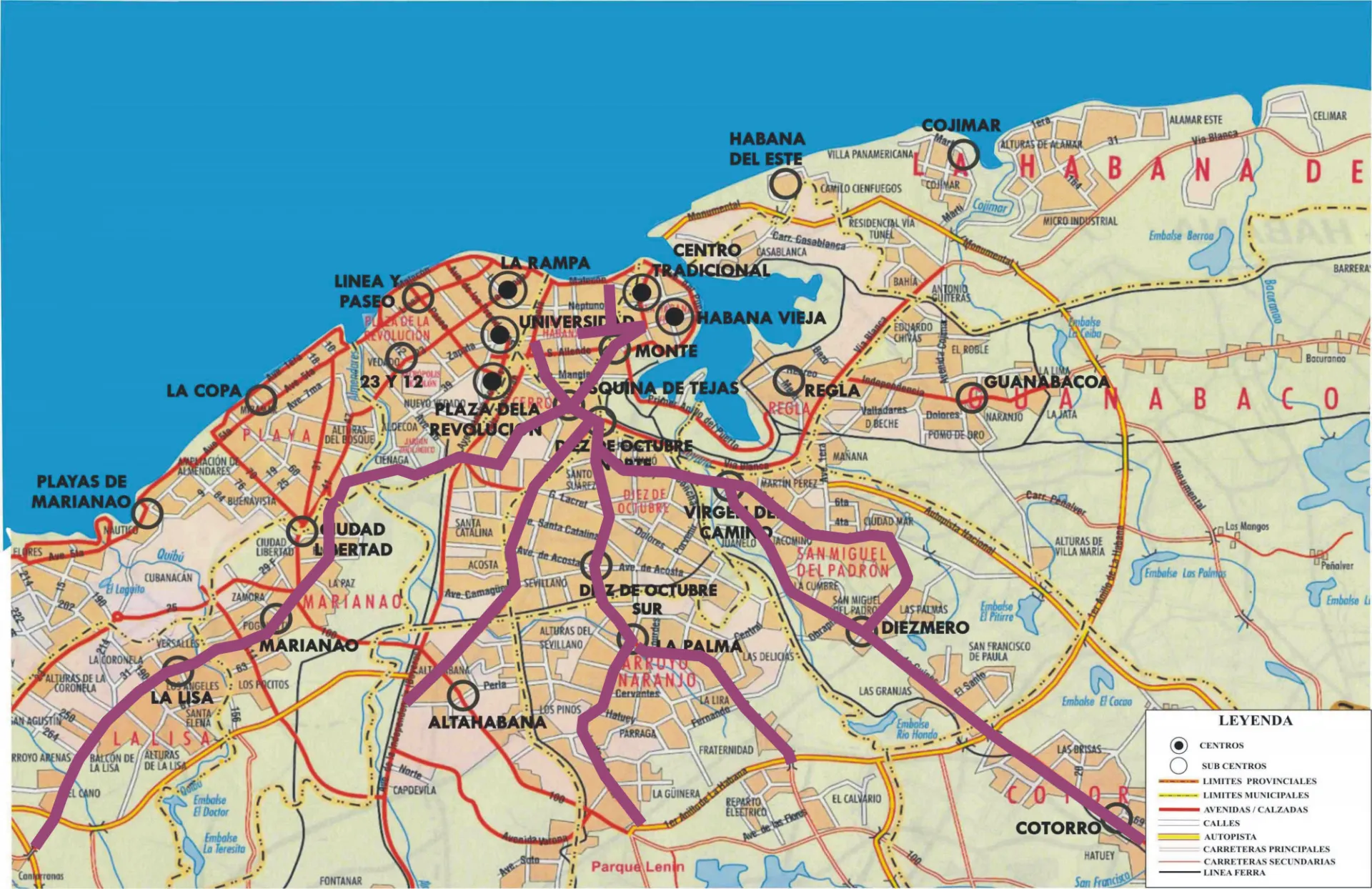
The Master Plan contemplates revitalizing the areas around the Calzadas with urban infill development, reducing sprawl and increasing density in these areas, revitalizing and redeveloping these traditional districts while keeping their historical identities.
Architecture as a Driver of National Development
The Master Plan articulates a vision in which architecture, heritage and public spaces function simultaneously as cultural assets and economic drivers, achieving a thriving metropolis where businesses grow, investors are enticed to locate there, local talent choses to remain in the country and grow its economy and tourists enjoy an extraordinary experience.
The Master Plan aspires towards a more beautiful, urban, and dignified Havana where all its inhabitants can live, work, and enjoy its amenities: a contemporary city that respects and values tradition, order and urbanity and honors the culture of cities.
[1] United Nations Scientific and Cultural Organization
[2] The Master Plan was registered by the author with the U.S. Library of Congress for Copyright in 2006. It is a comprehensive urban project proposal envisaged and developed by Professor Julio Cesar Pérez Hernández and his team. It was not commissioned by anyone. Rather, it is a personal reflection on the city, its history and its urban evolution and a proposal for preserving its urban and architectural legacy. With a strong commitment to great urban design in the Havana tradition, the Master Plan is conceived for a population of two million.
[3] the Plan of Expansion laid out by Colonel Engineer Antonio María de la Torre y Cárdenas between 1817 and 1819.
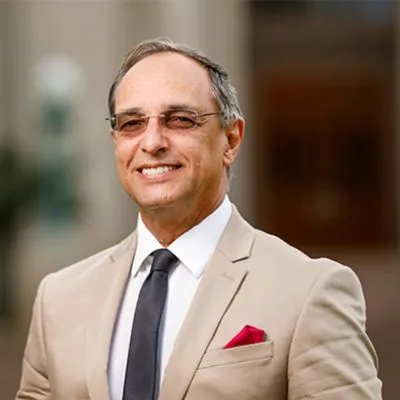
Julio Cesar Perez-Hernandez, a world-class expert in Cuban architecture and urbanism, has been an Associate Professor at the University of Notre Dame’s School of Architecture since 2017. He has lectured and taught in prominent institutions throughout the Americas and Europe.
Mr. Pérez Hernández is the author of the books Inside Cuba (2004) and Inside Havana (2011), both published by Taschen, and two forthcoming books to be published by Andelani Press (Puerto Rico). He has numerous publications in international journals.
Born in Havana, Cuba, Perez-Hernandez obtained his Diploma in Architecture at the School of Architecture of the University of Havana, Cuba in 1982. He taught Architecture and Urban Design at his alma mater from 1988 to 2006. In 2001, he became a Loeb Fellow at the Harvard University Graduate School of Design, where he was selected in as the 2012-2013 Wilbur Marvin Visiting Scholar.