
A Lesson from Recent Developments in Venezuela
Adopting a system of “rule of law” will make Cuba attractive to investors, both large and small, and galvanize its economy.

At a meeting in early January 2026 at which President Trump asked representatives of the oil industry to invest in Venezuela, Darren Woods, the Chief Executive Officer of ExxonMobil, said that Venezuela was “uninvestable”.
What does that mean, and how is it relevant to Cuba?
When is a Country “Investable” so as to Attract Significant Foreign Capital?
The term “investible” describes assets, such as projects or business entities, that are suitable, available, and attractive for investment. “Investible assets” meet the investor’s expectation that capital invested in those assets would likely produce a return projected by the investor, meeting certain criteria for relating to risk, liquidity and expected profitability.
At the White House meeting, why did Mr. Woods declare Venezuela “un-investible?” Afterall, President Trump had just advised the gathered oil executives that the U.S. now had a workable relationship with the current president of Venezuela, and that U.S. investments in Venezuela would be protected?
Does the word of a President provide protection?
Probably not. As the world watched, President Nicolás Maduro of Venezuela was captured in the capital of Venezuela and transferred to the U.S., demonstrating a limit on the power of Maduro’s word as a guarantee. The word of the U.S. president similarly does not provide the necessary security for investors of significant capital. Presidents change from time to time. Moreover, presidents sometimes do not honor their own word and even more often may not honor the word of a prior president.
In case of the total loss of an investment, does a financial guarantee from the investing country’s government provide protection?
The Export-Import Bank of the United States provides credit support to some U.S. companies investing abroad, but that is not a total guarantee of an investment. Other developed countries provide similar support to their businesses investing abroad. However, these government supports are not financial guarantees. In order to structure a financial guarantee as an absolute obligation of the U.S. government, it would likely need Congressional approval. And were it to become necessary to redeem the guarantee, there is no assurance that it would cover all of the losses that the investor may incur, including the expected return on the investment. Moreover, it would likely prove highly unpopular with the U.S. public for Congress to commit public funds to guarantee the investments of our large oil companies.
Rule of Law is the guarantee to investors that mitigates the risk of its investment.
In Venezuela, for example, as the oil company executives explained, some oil companies had been expropriated twice and were unwilling to take any significant risk of investing in a country that could very well expropriate them again. Indeed, that was the context in which Darren Woods used the term “univestable,” saying “If we look at the legal and commercial constructs and frameworks in place today in Venezuela today, it’s uninvestable,”[1].
As Luisa Palacios, the former chief executive of a Citgo Petroleum, a U.S. oil refining company owned by Venezuela’s state oil company, said, “It’s not that oil companies don’t operate in risky places; it is the inability to assess the risk at this moment.”[2]
Rule of Law provides the framework that investors, both large and small, are seeking.
Its framework is laws and rule that create certainty with regard to how a government will act in any given circumstance that allows investors to calculate the risks associated with their investment. With these, they know they can depend on clear rules for how to operate their investment and interact with the other economic actors in the country.
Origins of Rule of Law
The origins of Rule of Law date back to the ancient Greeks and their philosophers, such as Aristotle and Plato, who believed that people should be governed by fair laws and not arbitrary rulers.
In England, the concept that the King (and therefore the rest of the government) was also subject to the law was first established as early as 1215 in the Magna Carta. Previously, King John and his predecessors had ruled by will as they pleased, justified on the basis that the King was chosen by God and therefore was above the law. In the Magna Carta, King John and the nobles of the realm reached agreement creating a council of nobles and that disputes between the King and the nobles would be decided before the council. (It was not a court of law as we understand it today, but a dispute resolution mechanism nonetheless.)
Over time, the principles of the Magna Carta influenced the development of the Bill of Rights, included in the U.S. Constitution and the development of European constitutions and those of many democratic countries around the world.
Elements of Rule of Law
As we understand it today, the very basic aspects of rule of law require that the law be:
Publicly promulgated – the rules adopted by the legislature are clear to all and can easily be found by anyone in a public forum, such as a library or the Internet.
Equally enforced – the law is applied by the court without favor and regardless of the status of parties before it, including the State.
Independently adjudicated – independent courts that enforce the law do not take orders from the executive branch of government, the military or the legislature; they arrive at their own conclusions.
It is not a system or connections or permissions – all persons, regardless of who they know, receive the same treatment before the court. Permissions, unless contained in properly adopted laws or regulations known to all, do not provide certainty, as they could always be withdrawn or superseded by another permission granter.
Consistent with international human rights principles - which among numerous other principles, include the right to the protection of personal property by the State.
Rule of Law: Why Should We Care About it Other than Tradition?
Economic development occurs when there is widespread participation in the economy and not when power and resources are concentrated in a small elite. The Nobel Memorial Prize in Economic Sciences in 2024 was awarded to three economists (Daron Acemoglu, Simon Johnson, and James A. Robinson) for their research on how societal institutions, such as rule of law and protection of property rights, influence a nation's prosperity and economic growth.[3]
In their analysis, Messrs. Acemoglu and Robinson debunked prior theories of economic development: (i) that development depended on a country’s location in the northern hemisphere instead of southern hemisphere; (ii) that abundant natural resources determined which countries would develop; (iii) that the culture and ethnicity of its citizens determined their development. Instead, the authors showed, by analyzing the operation of nations throughout history, that nations with widespread citizen participation in policy making and in the economy were those that flourished, and when power and wealth was concentrated, those same nations failed.
Why Independent Courts are Critical to Economic Development
Of all its elements, the key enforcement of rule of law is the fair adjudication of disputes, which only occurs when courts are independent to determine that laws were properly promulgated and are fairly and consistently applied in an effective fashion. Courts ensure the fair enforcement of property rights and contracts for all and therefore encourage widespread participation in the economy. Economic actors can do business with each other without having prior family or social connections, greatly expanding the range of mutually beneficial economic interactions.
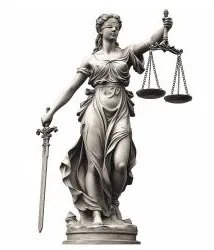
It is independent courts that address what Cooter & Schäfer[4] termed the “double-trust dilemma,” a dilemma presented in any investment or commercial transaction: each side fears that the other side will not perform. It is the independent court, not beholden to either side or to any other governmental entity that provides assurance of a fair resolution in the case of a dispute and the fair enforcement of property rights and contracts. Parties do not need to “have contacts” at the court and the less powerful do not need to fear the more powerful before the court.
When the State is not trusted by the investor because of a prior history of expropriation of property rights, providing independent, effective courts is a binding promise of the State to the investor of certainty that the property rights and contracts associated with an investment will be fairly interpreted without favoring the State.
Independent courts reduce risk and create certainty for the economic actors in the country. Opinions are published and can be reviewed by litigants to assess their relative positions in a subsequent dispute and the chances of winning in court. Importantly, independent courts mitigate risk for parties to economic transactions. As Ms. Palacios points out, what investors need is to be able to adequately assess the risk of an investment or a commercial transaction without a hidden finger being placed on the scales of justice.
How Independent Courts Benefit Citizens Generally
Independent courts legitimate government action. If the court upholds a law, the public is assured of its legitimacy. If the court strikes down a law as contrary to the constitution, the legislature knows that it needs to reintroduce it in a compliant form or merely abandon it.
The mere existence of the independent courts serves to encourage citizen compliance with law. Employers treat employees in accordance to employment laws. Citizens follow traffic regulations to avoid fines and traffic court. Tenants know they cannot be arbitrarily evicted and have recourse to landlord-tenant court. Disputes in daily life can be resolved, if necessary, by a tribunal that neither side can influence or control.
But of great importance for the widespread participation in the economy by its citizens, independent courts allow its citizens to operate businesses, innovate and create new technologies that will benefit all, as the courts will protect the property rights in those creations for their growth to the benefit of all society.
Conclusion
The events of January 2026 in Venezuela, including the capture of Nicolás Maduro and political and diplomatic reactions those have unleashed, provide a crude illustration of the importance of being able to rely on a system of Rule of Law so that a nation is truly “investible”. As we have seen from the reaction of the giants of the energy sector, the lack of institutions in Venezuela that provide certainty to investors drastically impacts confidence by investors, both national and foreign.
The lesson of Venezuela supports the thesis here outlined, but should serve as a lesson for other economies ripe for transition, such as that of Cuba, that are looking to attract capital and and develop their economies.
[1] Trump threatens to block ExxonMobil from Venezuela after CEO calls country ‘uninvestable’, The Guardian, January 12, 2026.
[2] Trump Urges Oil Companies to Speed Work in Venezuela, The New York Times, January 9, 2026.
[3] See, Why Nations Fail: The Origins of Power, Prosperity and Poverty, by Daren Acemoglu and James A. Robinson, March 20, 2012.
[4] Salomon’s Knot: How Law Can End the Poverty of Nations, by Robert D. Cooter and Hans-Bernd Schäfer, January 16, 2012.