
The Government Program: Wishes or Certainties?
Omar Everleny Pérez Villanueva
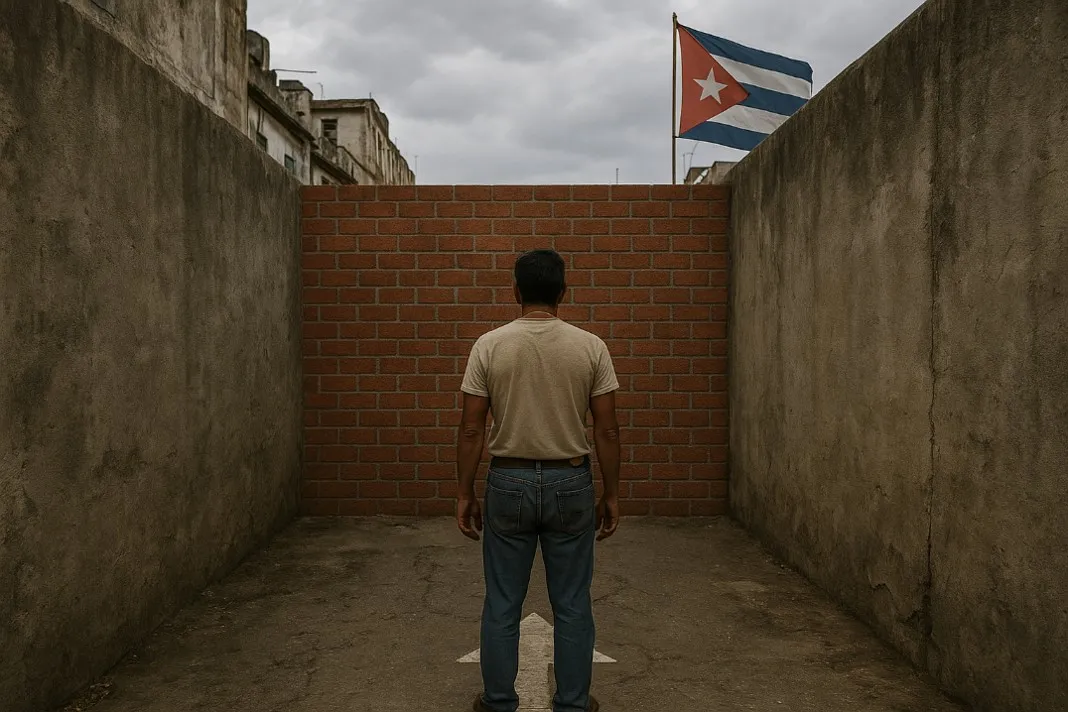
The recently published Cuban government program reads like a list of wishes and dreams; without taking reality into account. With this program, the country will not emerge from the deep economic crisis in which it is currently mired.
It is worth reviewing and analyzing the Government Program to correct distortions and reboot the economy that was finally published in October, 2024 (the “Program”).
First, it is worth mentioning because there was widespread public demand to see what it offered ever since its release was announced almost two years ago.
Second, because once read, it confirms what many had suspected: with this Program the country will not emerge from the deep economic crisis in which it is immersed.
I will try not to repeat academic analyses criticizing its lack of overall coherence and integration, or its numerous omissions. Instead, I will try to review it as any ordinary reader would. And my first question is this: what distinguishes the Program from the “Guidelines of the Cuban Communist Party’s Economic Policy and the Revolution of 2011”? Or, from the “National Economic and Social Development Plan to the Year 2030”, approved in 2019? Or, from other similar documents produced in recent years?
Of course, each of these texts has its unique features, but each also shares many common elements with the others. In their preparation, discussion, and analysis of the Program, specialists, officials, and academics devoted countless hours to producing a document that resembles a lot of prior documents, becoming a list of wishes and dreams, yet failing to take reality into account.
The Program contains a list of goals, but with no indication of how the stated goals will be achieved, no strategies or project management plans to reach them, and no clear identification of the changes necessary to current practices in order to achieve them.
It was no coincidence that, during the first quarters after the “Guidelines for the Political and Social Policy of the Party and Revolution”, approved in April 2011 during the VI Congress of the Cuban Communist Party (the “Guidelines”) were published, progress in their implementation was reported in percentage terms relative to the total set of proposals it contained. It was logical that the percentages of accomplishments were initially high, since the simplest problems were being addressed first—often eliminating absurd prohibitions previously in effect, such as banning purchase and sale transactions of houses and vehicles between private individuals. Those activities should never have been banned.
As those simpler problems were resolved, implementation of the Guidelines began to taper off until they were no longer mentioned. That was because their execution required genuine reform and fashioning concrete solutions—and many provisions of the Guidelines contained no clear definitions.
With its overly broad definitions, large aspirations, and the absence of clear executable plans, the Program appears to be heading down the same path.
The population is already tired of the many all-encompassing programs and the never-ending long-term goals proposed from time to time. Instead, people expect concrete solutions and measures that actually drive the economy forward—not promises. Not dreams.
Had it been called, like previous documents, “Guidelines”, “National Plan”, “Programmatic Platform”, or some other generic name, the contents of the Program might be more understandable. But the Program has been touted as a program to correct distortions, so one would expect at the very least to know which distortions the government believes exist—and, above all, which it intends to correct.
After all, one group may consider a given issue a distortion, while other segments of the population may see it as “normal.” Another audience—or the government itself—may hold diametrically opposed views on the matter.
The Program’s Omissions
If the Program had in fact identified the distortions it touts it is designed to correct, the Program should then include a working plan on how they would in fact be corrected.
In reality, it contains neither one nor the other. Its very title begins with the ideas that there are distortions in the economy, yet they are not identified. And, based on the title alone, which promises to recharge the economy one would also expect the document to set out ideas for re-boosting the economy.
I will not consider here whether the economy has ever truly received a boost and now needs to be re-boosted again. (Cuba’s GDP statistics over the past twenty years offer plenty of material for such a discussion).
What matters most is that the Program document calls for “advancing”, “intensifying”, and “increasing” production, and it uses similar verbs as substitutes for descriptions on how the economy will be improved. This brings to mind the famous phrase: “technique is technique, and without technique there is no technique.” According to the Program document, to achieve production one must produce, and thereby boost or re-boost the economy—a clearly circular logic.
Let us see whether my interpretation is correct. If we take just the first four of the ten general objectives of the Program, we have:
- To advance in the implementation of the macroeconomic stabilization program.
- To increase and diversify the country’s external revenues.
- To increase domestic production, with an emphasis on food.
- To advance the resizing, development, and management of the socialist state-owned enterprise and other economic actors.
These, together with the ninth objective (regarding the National Electric Power System), are the ones most closely related to the economy.
The specific objectives and actions of the Program are to be accomplished by using the following verbs, more or less along similar categories:
- Intensify, strengthen, raise, increase, grow: 25 times.
- Implement, apply, execute, initiate, introduce, carry out actions: 23.
- Advance, consolidate, conclude, complete, refine, strengthen: 20.
- Develop, promote, produce, expand, extend: 12.
- Evaluate, identify, control, monitor: 9.
- Establish, initiate, create, constitute: 9.
- Guarantee, ensure, take advantage of, recover, stimulate, enhance, promote: 27.
- Decrease, reduce: 4.
- Continue, maintain: 10.
An obvious question arises: what is the point of referring to what already exists and is meant to be maintained? Also, if we simply continue to maintain something, can real change be achieved?
There are also other verbs scattered throughout:
- Confront, comply, specify, classify, insert, select, identify, manage, attract, update, organize, improve: 17 times.
In the case of more specific tasks referenced in the Program such as proposing, presenting, designing, and drafting—verbs mentioned 51 times—the Program does not even indicate who is to carry them out: a ministry, the government as a whole, or the National Assembly? No deadlines are established by the Program, nor are there any premises or guidelines for carrying out these tasks.

So are we to continue waiting, as we have been for the Implementation of the Guidelines?
It seems there is a belief that if an issue is flagged in a document, or if it is mentioned by some government official, solutions will materialize on their own.
For example, we are told that the culture of slapdash work must be eliminated. But merely naming the problem will not make it disappear. We constantly hear on television that “we must” do this or “we have to” think about that. Change will not occur through spontaneous generation.
Enough of detailing dreams to be achieved when it is clear that the conditions to achieve them do not exist in the country’s current state.
As discussed above, the plans and ideas for achieving the desired outcomes identified in the Program cannot be accomplished just by listing a sequence of infinitive verbs.
The Program does not explain how distortions will be eliminated—much less how the economy will be re-boosted. The goals set forth in the Program cannot be carried out through an action plan of the Central State Administration Bodies or any other entities alone. Nor can it be delegated it to lower level officials. Nor can they be accomplished through endless discussions and analytical processes at the grassroots level.
What is truly needed is legislation, complementary regulation, concrete measures to implement the norms, and oversight of their implementation. That is undoubtedly a task for government leaders. What is needed is new legislation to be debated and implemented at the highest level. With the existing ones, as we all know, no progress has been made.
As if its insufficiencies and omissions were not enough of a disappointment, the Program claims to be dynamic and continually self-enriching. In reality, the Program is the result of more time and money wasted on selecting verbs and dreaming up previously overlooked goals, instead of focusing on concrete measures to stimulate productive activity.
Some argue that the Program falls short in its identification of goals, and that may be the case. But I would argue instead that it includes too many. Short term, we should focus on priorities so we can actually produce concrete positive results. Therefore, in the immediate term I would focus on objectives 2 and 3.
In Conclusion
It is perfectly reasonable for the government to have strategies for defense and national security, or to develop social policies, to name just a few general objectives. It is also to be expected that other documents would contain details for those. But the Program text announces that it is intended to correct distortions and re-boost the economy.
Instead, the Program includes indicators and targets with numerical goals. But almost all of them appear to be indicators from the 2025 economic plan, which compares them with 2024. It is logical to expect the updating of the Program with 2026 indicators, compared with 2025. But that is the purpose of the annual economic plan. There was no need to release a separate program to correct distortions and re-boost the economy to repeat the economic plan.
Let us assume, for the sake of argument, that the Program is realistic in terms of the goals it sets, that it lacks “unrealistic future dreams”, but instead focuses on how certain specified goals can be met. As the saying goes, “the devil is in the details”—that is, in how those goals are supposed to be achieved and what legislation is envisaged to reach specific objectives.
Program specific objective 1.6—gradually reducing inflation—states that it is necessary to propose the regulation of maximum prices for new products in high demand among the population. Once again, we see insistence on a price control solution that, in practice, has proven not to lead to economic improvement.
If the Program were specific, identifying issues to be resolved, describing a path towards resolving them as envisioned by the government, we would have more elements with which to determine whether Cuba is truly moving toward eliminating distortions and/or re-boosting the economy.
There is no alternative but to conclude that the current Program clarifies neither one nor the other.